A document is the most trusted form of evidence and the least examined. People produce one and assume the question is closed, when what the document establishes is often narrower than the fact they are trying to prove: a certificate proves that a registrar recorded something, not that the thing recorded is true; a signature proves execution, not understanding. This subject sets out what particular documents establish, the formalities that give them weight, and what happens when the original is gone.
A notary verifies the identity of a person appearing before them and records the act performed: an acknowledgment that a signature is the signer's own, or an oath supporting a sworn statement. The notary does not read the document for content, does not advise on it, and does not certify that it is valid. Almost every complaint against a notary arises from that gap.
A conflict between documents is resolved by asking which record was made closest to the event, by somebody in a position to know, for a purpose that made accuracy matter. A later document copying an earlier error is not corroboration. Where the conflict cannot be resolved on those grounds, the honest course is to present both and say which is relied on and why.
The instructions to a form define its terms, list the evidence each answer requires, and state what happens when a question does not apply. A form completed from the printed question alone frequently produces answers that are true in ordinary language and wrong in the agency's usage. Reading the instructions first, and keeping the version used, prevents most of the difficulty.
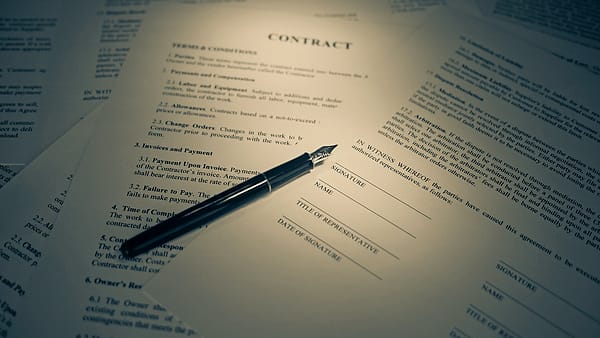
A witness attests that a named person signed in their presence and appeared able to do so. Wills, deeds and health care directives commonly require witnesses; ordinary contracts generally do not. Who may act is restricted, most often by excluding anybody who benefits under the instrument, and a disqualified witness can void a gift or the instrument itself.
A document without a date still proves its own contents, its authorship and, where the paper is authenticated, its origin. What it cannot do is fix itself in a sequence, which matters wherever the order of events decides the outcome. The date is then established circumstantially, from the file it sits in, the events it mentions, the paper it is printed on and the people who handled it.
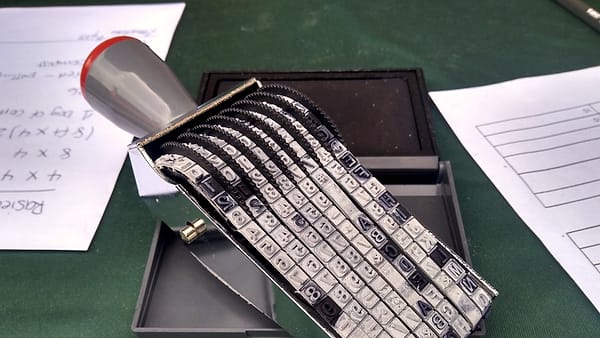
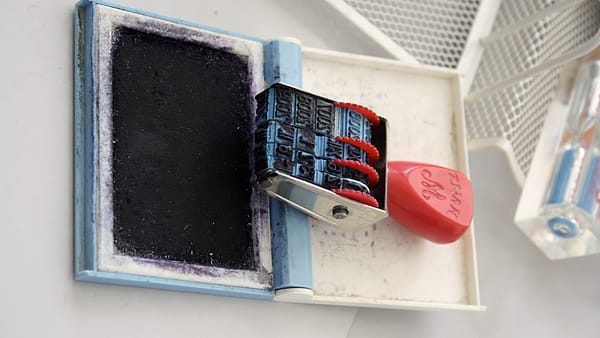
A seal or official stamp asserts that a document was issued by a particular office acting in its official capacity. That assertion is why sealed public documents are treated as self-authenticating and can be filed without a witness. It says nothing about the accuracy of the contents, and a seal that cannot be checked against a known specimen is a claim rather than a verification.
A document establishes that a particular record exists, was made by a particular body, and says what it says. It does not establish that the statements inside it are true, that the person named understood what they signed, or that nothing has changed since. Each of those is proved separately, and the formalities attached to a document decide only how much work is left over.
A certified copy carries a statement by the officer who holds the original that the copy matches the record. Its value comes entirely from that custody. A notarized copy is a different thing: the notary attests that a copy was made in their presence, which addresses tampering but says nothing about any register. Knowing which one a proceeding wants avoids a wasted trip.
An original is required only where the contents of a writing, recording or photograph are what is being proved. A duplicate is admissible to the same extent unless a genuine question is raised about authenticity or unless the circumstances make it unfair. Where the original has been lost or destroyed without bad faith, or is beyond reach, other evidence of its contents becomes admissible.
A duplicate is admissible to the same extent as an original unless a genuine question is raised about authenticity or the circumstances make it unfair. Beyond that general rule, particular instruments require the original as a matter of their own law: negotiable instruments, wills in most states, and documents where possession itself confers a right. Agencies impose their own separate requirements.
Where an original has been lost or destroyed without bad faith, other evidence of its contents becomes admissible. The proponent explains what the document was, when it was last seen, what search has been made and why it cannot be produced. A vague account fails where a detailed one succeeds, and the difference is usually a matter of effort rather than of facts.
An exhibit needs three things: an identifier that appears on the exhibit itself, a reference in the document it supports, and a physical or electronic association strong enough to survive handling. Where any of those is missing, the attachment stops being evidence of anything in particular and becomes a page somebody has to argue about instead.