Seals, Stamps and What They Certify
An impressed seal carries a weight out of all proportion to the ink it uses. It is a shorthand claim about where a document came from, and the shorthand is what makes it both useful and the first thing a forger reproduces.
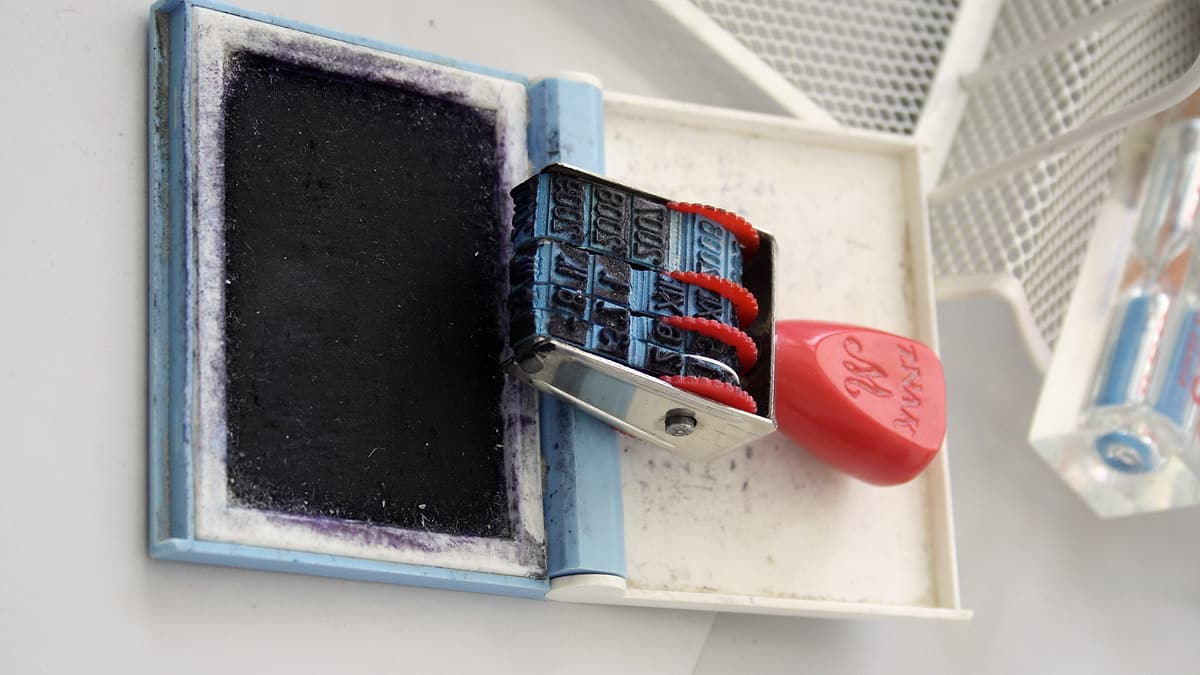
The rule in short
A seal or official stamp asserts that a document was issued by a particular office acting in its official capacity. That assertion is why sealed public documents are treated as self-authenticating and can be filed without a witness. It says nothing about the accuracy of the contents, and a seal that cannot be checked against a known specimen is a claim rather than a verification.
Seals are the oldest surviving authentication technology still in daily use, and they work the same way now as they always did. The impression asserts that a document issued from a particular office. Everything that follows from that assertion depends on whether the assertion can be checked, and on nothing else.
What a seal asserts
Official origin. This document came from this office, acting in its official capacity, rather than from a person who happens to work there and has access to the letterhead. That distinction is the whole content of the assertion.
Authority to issue. The office had the power to make a document of this kind at all, which is very often the fact that actually matters in a dispute about a permit, a license or a certificate somebody has produced.
Completeness, sometimes. A seal placed across a join or over a fold asserts that the pages traveled together, which is why removing a fastening damages the assertion.
Nothing about accuracy. The register behind the seal may contain an error made decades ago by somebody transcribing a name they had only ever heard spoken, and the sealed certificate reproduces that error perfectly faithfully.
Nothing about currency. A sealed certificate speaks as of the moment it was issued. Whether the underlying entry has since been amended, annotated or superseded is a separate question, and one the certificate cannot answer.
The three kinds of mark, and what each is for
Embossed impressions. A physical deformation of the paper. Difficult to reproduce photographically, which is why a photocopy of an embossed certificate loses the feature entirely.
Ink stamps. Easy to apply and easy to copy, so whatever value they carry lies in the wording, the register number and the accompanying signature rather than in the mark itself. Alone, an ink stamp establishes very little.
Printed security features. Watermarks, intaglio printing, microtext, fluorescent fibres and void pantographs, which move the assertion from the mark into the substrate.
Digital seals. A cryptographic signature over the document, verifiable against a published certificate. It is the only variety that can be checked without holding a known specimen for comparison, and the only one that survives being emailed.
Combinations are common. Most official documents now carry several of these features at once, and the strongest of them is usually the one hardest to see: a watermark, a fibre, or a line of microtext that only reveals itself under magnification.
| Mark | Hard to forge | Survives photocopying |
|---|---|---|
| Embossed impression | Moderately | No |
| Ink stamp | No | Yes |
| Security substrate | Yes | No, by design |
| Digital seal | Yes, if verified | Yes, if the file is preserved |
Why sealed documents are self-authenticating
The rules name them. Domestic public documents under seal, and certified copies of public records, are admissible without a witness to establish what they are.
It is a rule of convenience. Requiring a custodian to travel and testify for every register entry offered in evidence would stop proceedings altogether, so the seal stands in for the witness who would otherwise have to be called.
It is rebuttable. Self-authentication removes the need for proof of authenticity; it does not prevent anybody proving that the document is a forgery.
It does not make contents admissible. The hearsay question is entirely separate, although public records happen to have their own exception as well, which is why the two rules are confused with each other so persistently.
Unsealed official documents need more. A signature plus a certification that the signer holds the office, which is the longer route.
Treating a seal as the end of the enquiry inverts its purpose. It exists to save the trouble of proving origin where nothing is in doubt. Where something is in doubt, it is the first thing to check rather than the reason not to check anything.
Checking a seal that arrives from elsewhere
Compare against a known specimen. Many agencies publish images of their current seals, and several maintain lists of the specimens they have retired. A side-by-side comparison takes minutes and settles most questions on the spot.
Read the wording. Forged seals frequently carry an office name that does not exist, a misspelling nobody proofread, or a formula the real office abandoned years earlier. Reading the ring of text is quicker than any other check.
Check the register number. Where a certificate carries a serial or an entry number, the issuing office can usually confirm that the number matches the entry and that the particulars on the certificate match what the register holds.
Feel the paper. Embossing, intaglio printing and security substrate are all tactile, and the absence of any texture at all on a document that ought to have some is more informative than any amount of looking.
Ask the issuing office. The slowest and most reliable method, and the one that resolves questions about a document suspected of being forged.
Foreign seals, and why they need a chain
Recognition does not travel. No official here can reasonably be expected to know what a provincial registrar's seal in another country looks like, or to notice that the wording on it changed after an administrative reorganization.
So a chain is used instead. Each authority in turn certifies the signature and seal of the one below it, ending at an office the receiving country does recognize. Recognition is manufactured by the sequence rather than assumed.
The apostille shortens the chain. Set out in the apostille and the countries it covers, which replaces the whole sequence with one certificate.
Legalization is the longer route. Where no apostille is available, described in legalization where no apostille applies.
The chain proves origin only. Exactly as a domestic seal does, and for exactly the same reasons. A fully legalized certificate recording something untrue is a fully legalized certificate recording something untrue.
The reason seals persist in an age of databases is that they are a physical claim attached to a physical object, and physical claims are still the cheapest to make and the easiest to inspect. A digital signature is stronger and requires equipment; a raised impression requires a thumb.
That also explains why photocopies of sealed documents are so often refused. The copy discards the part of the document that was doing the authentication work, leaving a picture of a seal, which is exactly what a forger would produce.
For any document arriving from an unfamiliar office, the useful reflex is to treat the seal as an invitation. It names the office that claims to have issued the document, and that office can be asked whether it did.
None of the marks reach the contents. A sealed certificate recording a name spelled three different ways in three different registers is a sealed certificate recording an error, and the argument about which spelling is right happens entirely outside the ink.
Points to carry away
- A seal is a claim about origin, which is why sealed records are self-authenticating.
- Embossing, ink stamps and printed security features do different jobs.
- A seal certifies nothing about whether the recorded facts are correct.
- Foreign seals are verified through a chain rather than by recognition.
- An unfamiliar seal invites verification and does not settle anything on its own.
Questions readers ask
Is a document without a seal less reliable?
Not necessarily. A great many official records are issued unsealed, particularly where they are generated and transmitted electronically, and their authenticity is established by other means: a verification portal, a reference number the issuing office can confirm, or a certification signed by an officer. The absence of a seal matters most where a seal would ordinarily be present, because that is a discrepancy. On a document that never carried one, it tells nobody anything at all.
Can a seal be applied to a document after it was signed?
Physically, of course, and that is one of the reasons a seal alone rarely settles a serious dispute. The protections against it are procedural rather than physical: the register number tying the certificate to an entry, the issuing office's own record of what was issued and when, and, on documents where it matters, a seal placed across a fold or a join so that the pages cannot be separated and reassembled without visible damage.
Do digital seals replace physical ones?
They are replacing them steadily, and they are stronger, because a cryptographic signature can be verified by anybody with the published certificate and does not depend on recognizing an impression. The practical obstacle is that verification requires the recipient to have the means and the habit of checking, and many receiving bodies still print the document and look at it. Until the checking habit catches up, most issuing offices produce documents carrying both.
Sources
- Federal Rules of Evidence — Rule 902, Evidence That Is Self-Authenticatinglaw.cornell.edu
- Federal Rules of Evidence — Rule 901, Authenticating or Identifying Evidencelaw.cornell.edu
- Federal Rules of Civil Procedure — Rule 44, Proving an Official Recordlaw.cornell.edu
- Hague Conference on Private International Law — Apostille Sectionhcch.net
- U.S. Department of State — Authenticate Your Documenttravel.state.gov
- Legal Information Institute — Forgerylaw.cornell.edu
True Justice Record is a publication, not a law firm. This article states general rules and cites its sources; it is not advice about any particular case, and the law differs by state and changes over time.
More in Documents and What They Prove
The Notary's Role, and Its Limits
A notary verifies the identity of a person appearing before them and records the act performed: an acknowledgment that a signature is the signer's own, or an oath supporting a sworn statement. The notary does not read the document for content, does not advise on it, and does not certify that it is valid. Almost every complaint against a notary arises from that gap.
The Document That Contradicts the Record
A conflict between documents is resolved by asking which record was made closest to the event, by somebody in a position to know, for a purpose that made accuracy matter. A later document copying an earlier error is not corroboration. Where the conflict cannot be resolved on those grounds, the honest course is to present both and say which is relied on and why.
Reading a Form Against Its Instructions
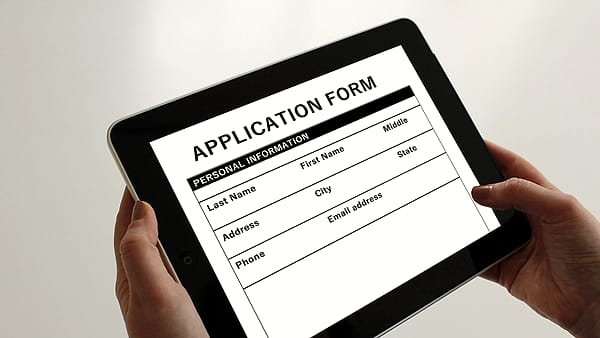
The instructions to a form define its terms, list the evidence each answer requires, and state what happens when a question does not apply. A form completed from the printed question alone frequently produces answers that are true in ordinary language and wrong in the agency's usage. Reading the instructions first, and keeping the version used, prevents most of the difficulty.