The Notary's Role, and Its Limits
A notarial certificate is one of the most widely produced and least carefully read documents in circulation. It performs a narrow function extremely well, and it is routinely offered as proof of things it does not touch at any point.
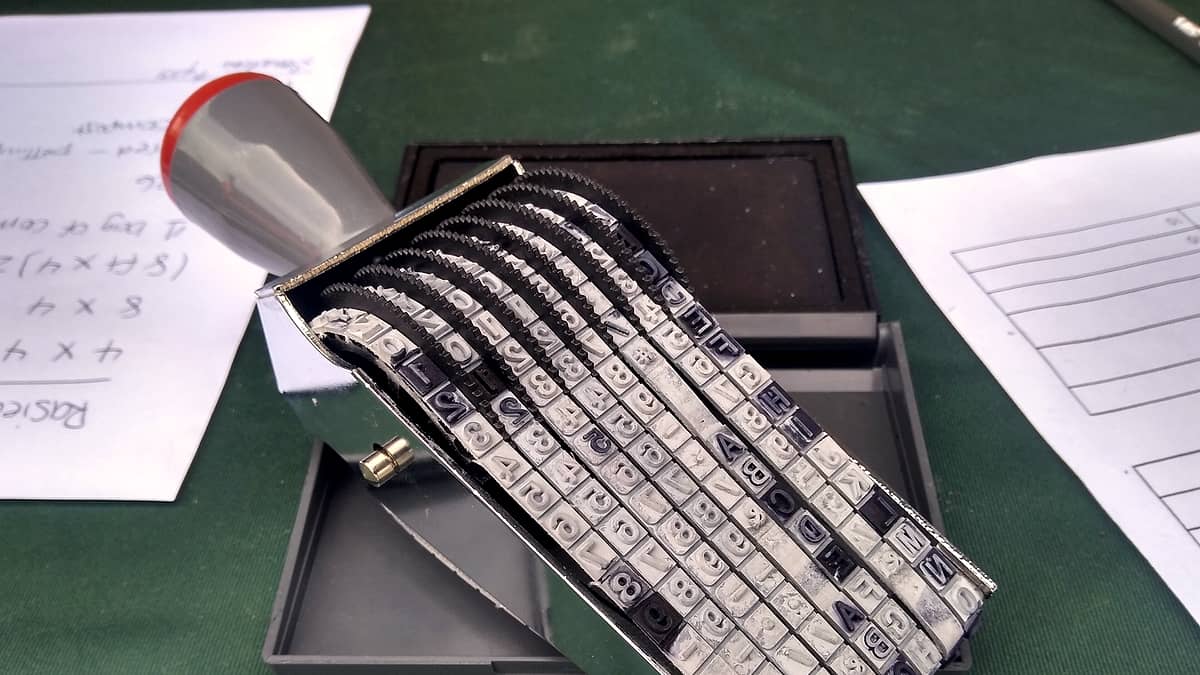
The rule in short
A notary verifies the identity of a person appearing before them and records the act performed: an acknowledgment that a signature is the signer's own, or an oath supporting a sworn statement. The notary does not read the document for content, does not advise on it, and does not certify that it is valid. Almost every complaint against a notary arises from that gap.
The notarial seal has an authority in ordinary imagination far beyond anything the office claims for itself. What a notary does is verify who appeared and record what act they performed. Everything else that people believe a notarization establishes has to be established some other way, and the belief is where most of the trouble starts.
What the notary actually verifies
Identity. By government-issued identification, or in some states by the oath of a credible witness who knows the signer personally and is known to the notary.
Presence. The signer appeared, in person or by an authorized audio-visual link. A document posted in for a stamp has not been notarized in any meaningful sense.
Willingness, as it appeared. A notary who forms the impression that a signer is under pressure is expected to decline, which makes their impression of the room worth recording.
Awareness, as it appeared. Not capacity in the legal sense, but whether the signer seemed to know what was happening. A notary is not qualified to assess more than that.
The act performed. Acknowledgment or oath, recorded in the wording of the certificate itself. The two are not interchangeable however similar the stamps look, and a filing that needed one and received the other is a filing with a hole in it.
Acknowledgment against jurat
An acknowledgment confirms a signature. The signer states that the signature is theirs and that they executed the document for its stated purpose. It may have been signed earlier.
A jurat supports a sworn statement. The signer swears or affirms that the contents are true, and signs in the notary's presence. The signing has to happen there.
The certificates read differently. "Acknowledged before me" against "Subscribed and sworn to before me", and the distinction is the whole of it.
Choosing the wrong one has consequences. An affidavit acknowledged rather than sworn has not been sworn at all, which can leave a filing unsupported and, where a deadline has since passed, unfixable without starting the whole exercise again.
The notary cannot choose for the signer. Selecting the certificate is the practice of law in most states, so the requesting body has to say which is required.
| Question | Does the notarization answer it | What answers it instead |
|---|---|---|
| Did this person sign | Yes | The certificate and the journal entry |
| Is the document accurate | No | The evidence behind each statement in it |
| Did the signer understand | No | Circumstances, advice taken, contemporaneous conduct |
| Is the document legally effective | No | The statute governing that instrument |
| Is this a true copy of a register | No | A certified copy from the custodian |
What a notarization does not do
It does not certify the contents. The notary need not read the document and in most cases does not, which is the point made throughout what a document proves.
It does not make a document valid. An instrument that fails a statutory formality fails with a seal on it exactly as it would without one.
It does not establish understanding. A signer may have understood nothing whatever about the instrument in front of them, and the certificate is entirely silent on the question. Understanding is proved from the circumstances, never from the stamp.
It does not certify a copy of a public record. That requires the custodian, as set out in who may issue a certified copy.
It does not confer authority. A notarized power of attorney is a notarized document; whether the powers in it are effective is a matter for the governing statute.
A notary who refuses to proceed is usually doing the job correctly. The common grounds are an identification that does not match, a signer who cannot answer basic questions about the occasion, a blank left in the document, and a third party doing the talking.
The journal, and why it matters later
Many states require one. A bound register of every notarial act, with the signer's name, the identification relied on, the act performed and the date.
It is often the only surviving record. Where the document itself is lost or its execution disputed, the journal entry may be the sole independent trace of the appearance.
Signatures and thumbprints appear in some. A few states require the signer to sign the journal, which produces a second specimen useful in any later examination of the handwriting.
Journals are obtainable. By subpoena, and in some states by written request, which makes them worth remembering whenever the execution of a document is contested and the notary is the only independent person who was present.
Retention periods are long. Frequently ten years or more, which comfortably outlasts most households' own records of the same transaction and makes the journal the surviving copy long after everything else has gone.
Remote notarization, and what changes
Most states now authorize it. By live audio-visual link, with the notary and the signer in different places and the whole session recorded. The authorizing statutes differ in their detail but agree on the shape of the thing.
Identification is more elaborate. Credential analysis of a photographed identity document, and a set of knowledge-based questions, replace the physical inspection that happens across a counter, on the reasonable view that a screen shows less.
The recording is retained. For a period set by statute, which produces something no traditional notarization ever produced: a recording of the signing itself, showing who was present and what was said while it happened.
Interstate recognition varies. A remotely notarized document is generally recognized across state lines, though a receiving body with its own rules can still decline it, and land registries have been the slowest of all to accept the practice.
The limits are unchanged. Everything a notary could not certify while standing in the same room, they cannot certify over a link. The technology changes the identification step and nothing else whatever about the office.
The office survives because the narrow thing it does is genuinely useful. An independent person, with no interest in the transaction, records that a particular human being appeared on a particular occasion and did a particular thing. That is a real fact, contemporaneously recorded, and it is hard to manufacture after the event.
The trouble comes from the surrounding expectation. Documents are handed over with the observation that they are notarized, as though the seal answered questions about content, capacity and legal effect. It answers none of them, and the person relying on it usually discovers that at the worst possible moment.
Where the execution of a document is likely to be contested, the useful step is not more notarization but more record: the journal entry, the identification relied on, a note of who else was in the room, and the reason the signing happened when it did.
For anyone reading a notarized document received from elsewhere, the certificate wording is worth a moment. It says which act was performed, and that single line decides whether the document in hand is a sworn statement or merely a signed one.
Points to carry away
- A notarization records identity and the act, not the contents of the document.
- Acknowledgment and jurat are different acts with different certificates.
- The notary's journal is often the only surviving record of the appearance.
- A notary has no authority to explain, correct or advise on a document.
- Remote notarization exists in most states and carries extra identification steps.
Questions readers ask
Can a notary refuse to notarize a document?
Yes, and in defined circumstances must. The usual grounds are an inability to identify the signer to the standard the state requires, a document containing blanks, a signer who appears not to understand what is happening or to be acting under pressure, and the notary having a personal interest in the transaction. Refusal is not a judgment about the document's merits, and a notary who explains why cannot go much further, because advising on the instrument would cross into the practice of law.
Is a notarized document self-authenticating?
For many purposes, yes. A document bearing a notarial certificate in proper form is treated as self-authenticating under the rules of evidence, which means no witness is needed to establish that it is what it appears to be. That is a rule about origin only. It does not make the statements inside the document admissible for their truth, and it does not stop anybody arguing that the signature was obtained improperly or that the signer had no idea what they were signing.
What happens if the notarial certificate is defective?
It depends on the defect and on the state. A missing commission expiry date or an illegible stamp is often curable, and some states allow a notary to correct a certificate within a limited period. A missing signature or a certificate for the wrong act is more serious, because the second is a record that something happened which did not. Where a filing depended on a sworn statement and the certificate shows only an acknowledgment, the safest course is to execute the document again.
Sources
- Legal Information Institute — Notary Publiclaw.cornell.edu
- Legal Information Institute — Affidavitlaw.cornell.edu
- Federal Rules of Evidence — Rule 902, Evidence That Is Self-Authenticatinglaw.cornell.edu
- 28 U.S. Code § 1746 — Unsworn Declarations Under Penalty of Perjurylaw.cornell.edu
- 18 U.S. Code § 1621 — Perjury Generallylaw.cornell.edu
- Legal Information Institute — Perjurylaw.cornell.edu
True Justice Record is a publication, not a law firm. This article states general rules and cites its sources; it is not advice about any particular case, and the law differs by state and changes over time.
More in Documents and What They Prove

The Document That Contradicts the Record
A conflict between documents is resolved by asking which record was made closest to the event, by somebody in a position to know, for a purpose that made accuracy matter. A later document copying an earlier error is not corroboration. Where the conflict cannot be resolved on those grounds, the honest course is to present both and say which is relied on and why.
Reading a Form Against Its Instructions
The instructions to a form define its terms, list the evidence each answer requires, and state what happens when a question does not apply. A form completed from the printed question alone frequently produces answers that are true in ordinary language and wrong in the agency's usage. Reading the instructions first, and keeping the version used, prevents most of the difficulty.
When a Signature Has to Be Witnessed
A witness attests that a named person signed in their presence and appeared able to do so. Wills, deeds and health care directives commonly require witnesses; ordinary contracts generally do not. Who may act is restricted, most often by excluding anybody who benefits under the instrument, and a disqualified witness can void a gift or the instrument itself.