What a Document Proves, and What It Only Suggests
People produce a document and assume the argument is over. It rarely is. What the paper establishes is almost always narrower than the fact somebody is trying to prove with it, and the gap between the two is where most evidence disputes actually live.
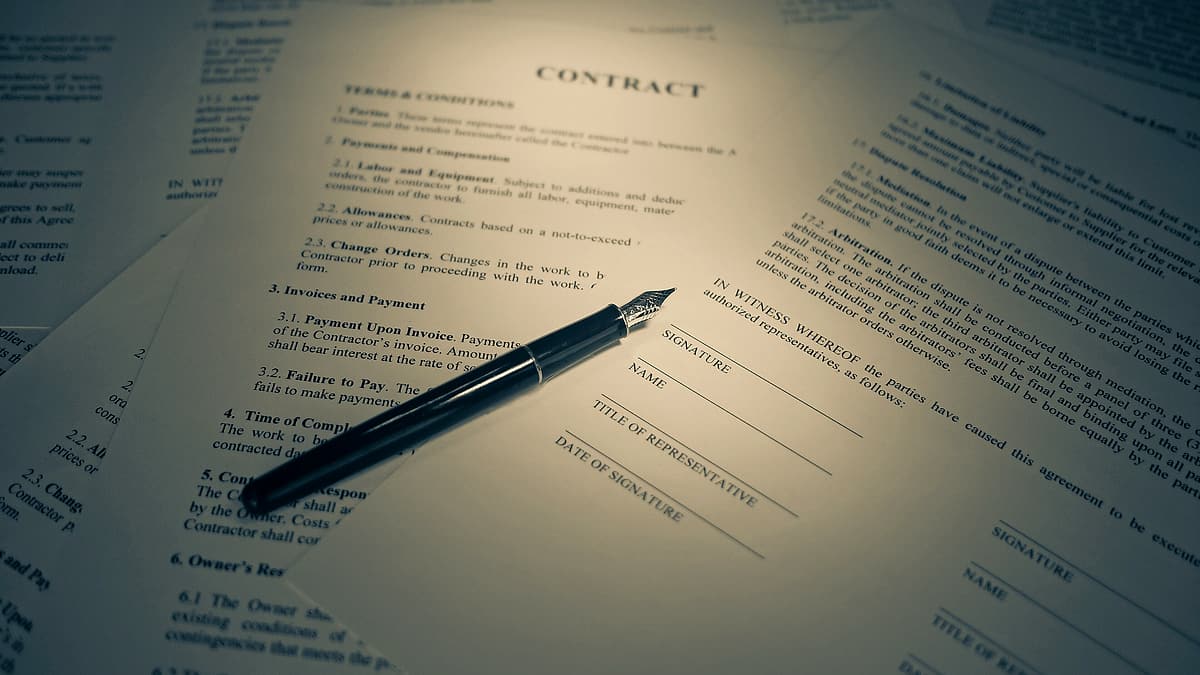
The rule in short
A document establishes that a particular record exists, was made by a particular body, and says what it says. It does not establish that the statements inside it are true, that the person named understood what they signed, or that nothing has changed since. Each of those is proved separately, and the formalities attached to a document decide only how much work is left over.
A great deal of legal argument is conducted by producing a piece of paper and waiting. The assumption underneath is that the paper settles the matter. It usually does not, because a document establishes something narrower than the fact it is being offered for, and the distance between those two things is where the actual dispute sits.
What a document establishes on its own
That it exists. Producing the paper establishes that a record of this kind was made, which is not always agreed and is occasionally the whole point.
That it came from where it claims to. Authentication is about origin: this certificate was issued by that registrar, this letter was sent by that office.
That it says what it says. The contents are fixed and can be read against any later account of them, which is why a contemporaneous document beats a recollection so often.
Nothing about whether the contents are true. A registrar writes down what somebody told them. The register is excellent evidence of what was reported and weak evidence of what happened.
Nothing about what has changed since. A document speaks as of the moment it was made, and a great many are produced years after that moment as though nothing had moved.
Authentication against truth
Two questions, two rules. Whether a document is what it purports to be is a question of authentication; whether its contents are reliable is a hearsay question. A document can clear one and fail the other.
Self-authenticating categories exist. Certain classes of record — official publications, certified copies of public records, documents under seal — are treated as authentic without a witness, which is a shortcut and not a finding of truth.
Authentication is a low bar. Enough evidence to support a finding that the item is what its proponent claims. It is not proof to any standard, and it does not decide weight.
Truth is where the argument goes. Once authenticity is conceded, the fight moves to what the contents are worth, and that is a question about the person who wrote them.
Conceding one is not conceding the other. Agreeing that a letter is genuine is not agreeing that anything in it is accurate, and the concession should be made in those terms.
| What is offered | Establishes without more | Still has to be proved |
|---|---|---|
| Birth certificate | A registrar recorded a birth with these particulars | That the particulars are accurate |
| Signed contract | This person executed this document | That they understood and intended its terms |
| Bank statement | The bank's own record of movements on an account | The purpose or character of any payment |
| Letter from an agency | The agency's position at the time of writing | That the position was correct or still holds |
| Notarized affidavit | A person appeared and swore to the contents | That the contents are true |
Recitals, and what they are worth
A recital is a statement, not a finding. The paragraph in a deed reciting that consideration was paid is the drafter's assertion, and it is worth what the drafter knew.
Some recitals are treated generously. Where a document is old, regular on its face and produced from proper custody, its recitals carry more weight than they would in a fresh document.
Repetition does not add weight. The same recital copied into six later documents is one assertion repeated, and a decision-maker counts it once.
A recital can be contradicted. By the very records it summarizes, which is why a document that contradicts the record is a distinct and common problem.
Boilerplate is still evidence. A standard clause nobody read is admissible and weak, and both halves of that sentence matter.
Offering a document for a proposition it does not reach, and treating any challenge to that proposition as a challenge to the document's authenticity. The two are answered by different rules and confusing them wastes the strongest thing in the file.
What the formalities actually buy
Certification narrows the argument. A certified copy removes the question whether the copy matches the original, and who may issue a certified copy decides whether the certification is worth anything.
Notarization verifies identity and execution. It says a person appeared and signed. It says nothing about whether they understood the document or meant it, and the notary's role has hard limits.
A seal signals official origin. Which is why sealed documents are often self-authenticating, and why an unfamiliar seal invites a question rather than settling one.
Witnessing addresses a different risk. It guards against a signature obtained privately from somebody who was not in a position to give it.
None of them makes the contents true. Every formality is about the making of the document. The truth of what is inside is untouched by all of them.
Using the distinction in practice
Name the fact, then find the document. Working the other way around produces a folder of papers that establish things nobody disputes.
Say what each document is offered for. A decision-maker who knows the purpose can see whether the paper reaches it; one who does not will assume the narrower reading.
Expect the recital to be tested. If the case rests on a sentence somebody typed into a document years ago, the person who typed it becomes relevant.
Keep the original where possible. Because the difference between an original and a copy becomes a live question the moment authenticity is contested.
Fill the remaining gap with something else. A document that gets halfway is not a failure; it is a document that needs one more piece of evidence beside it.
The practical discipline is to write down the fact that has to be established, in one sentence, before opening the folder. Almost every over-reliance on documents comes from working in the other direction: assembling everything on paper and then asking what it shows.
It is worth being explicit about what is conceded. Agreeing that a document is genuine costs nothing and buys goodwill, provided the concession is stated as a concession about origin and not about contents.
Where a document reaches only part of the way, the answer is usually one more piece of ordinary evidence rather than a better document. A registrar's entry plus a person who was present at the event is a complete case; a second copy of the entry is not.
None of this makes documents weak. Contemporaneous paper is the most reliable evidence there is, precisely because it fixes what somebody said at a time when nothing turned on it. The point is only that it fixes that, and not everything that follows from it.
A useful habit is to read every document twice: once for what it says, and once for what its author was in a position to know. The second reading is the one that decides how much of the sentence survives a challenge, and it is the reading almost nobody performs before relying on the paper in an argument. Where the question is whether a signature was properly attested rather than what the document says, when a Signature Has to Be Witnessed deals with the formality separately.
Points to carry away
- A document proves its own existence and contents before it proves anything about the world.
- Authentication and truth are separate questions, answered by different rules.
- Formalities such as certification and notarization narrow what still has to be proved.
- A recital inside a document is a statement by whoever wrote it, not a finding.
- The gap between what a paper says and what it establishes is where disputes begin.
Questions readers ask
Does a certified copy prove more than an ordinary copy?
It proves one more thing, and only one. A certification by the officer who holds the original establishes that the copy matches what is in the register, which removes any argument about transcription or tampering. It says nothing at all about whether the register itself is accurate, and it does not turn a disputed entry into an established fact. Where the fight is about what happened rather than about what was recorded, a certified copy and a photocopy are worth exactly the same.
Why is a recital in a deed not simply accepted?
Because a recital is a sentence somebody drafted, usually years before any dispute and often without checking. It has whatever authority its author had, which in the case of a conveyancer copying a previous deed is very little. Age and regularity can improve its standing: an old document produced from proper custody, consistent on its face, is treated more generously than a fresh one. That is a rule about the reliability of old paper rather than a rule that recitals are true.
Is an unsigned document worthless?
No, though it establishes less. An unsigned draft still proves that this text existed and that somebody prepared it, which can matter a great deal where the question is what terms were under discussion. What it cannot establish is agreement, because nothing on the page indicates that anyone accepted it. Unsigned documents are often the most useful evidence in a dispute about what the parties were negotiating and the least useful in a dispute about what they concluded.
Sources
- Legal Information Institute — Evidencelaw.cornell.edu
- Legal Information Institute — Authenticationlaw.cornell.edu
- Federal Rules of Evidence — Rule 901, Authenticating or Identifying Evidencelaw.cornell.edu
- Federal Rules of Evidence — Rule 902, Evidence That Is Self-Authenticatinglaw.cornell.edu
- Federal Rules of Evidence — Rule 803, Exceptions to the Rule Against Hearsaylaw.cornell.edu
- Federal Rules of Evidence — Rule 401, Test for Relevant Evidencelaw.cornell.edu
True Justice Record is a publication, not a law firm. This article states general rules and cites its sources; it is not advice about any particular case, and the law differs by state and changes over time.
More in Documents and What They Prove
The Notary's Role, and Its Limits
A notary verifies the identity of a person appearing before them and records the act performed: an acknowledgment that a signature is the signer's own, or an oath supporting a sworn statement. The notary does not read the document for content, does not advise on it, and does not certify that it is valid. Almost every complaint against a notary arises from that gap.
The Document That Contradicts the Record
A conflict between documents is resolved by asking which record was made closest to the event, by somebody in a position to know, for a purpose that made accuracy matter. A later document copying an earlier error is not corroboration. Where the conflict cannot be resolved on those grounds, the honest course is to present both and say which is relied on and why.

Reading a Form Against Its Instructions
The instructions to a form define its terms, list the evidence each answer requires, and state what happens when a question does not apply. A form completed from the printed question alone frequently produces answers that are true in ordinary language and wrong in the agency's usage. Reading the instructions first, and keeping the version used, prevents most of the difficulty.