The Difference Between an Original and a Copy
The rule that the original must be produced is called the best evidence rule, which is misleading twice over: it is not about which evidence is best, and it applies to a much narrower set of situations than the name suggests. Knowing where it bites saves a great deal of unnecessary trouble.
The rule in short
An original is required only where the contents of a writing, recording or photograph are what is being proved. A duplicate is admissible to the same extent unless a genuine question is raised about authenticity or unless the circumstances make it unfair. Where the original has been lost or destroyed without bad faith, or is beyond reach, other evidence of its contents becomes admissible.
The requirement to produce an original has a reputation out of proportion to its actual reach. It applies where the contents of a writing are the thing being proved, and not to every occasion on which a document appears in a case. Most of the time a duplicate does the same work, and the exceptions are worth knowing precisely because they are narrow.
When the original is actually required
When contents are in issue. Proving what a contract said, what a letter contained, what a photograph shows. The writing is the evidence rather than a record of it.
Not when the writing merely happens to exist. A witness can say a payment was made without producing the receipt, because the fact is the payment and not the wording of the receipt.
Not for collateral matters. Where the writing concerns something peripheral, the requirement gives way rather than derailing the hearing over a minor point.
Recordings and images count as writings. The rule reaches recordings and photographs, which surprises people who think of it as a paper rule.
Summaries are a separate route. Voluminous records can be proved by a summary, chart or calculation, provided the underlying material is made available to the other side and, if the decision-maker asks, produced. That is a practical accommodation rather than an exception, and it depends on the underlying records themselves being admissible.
What counts as a duplicate
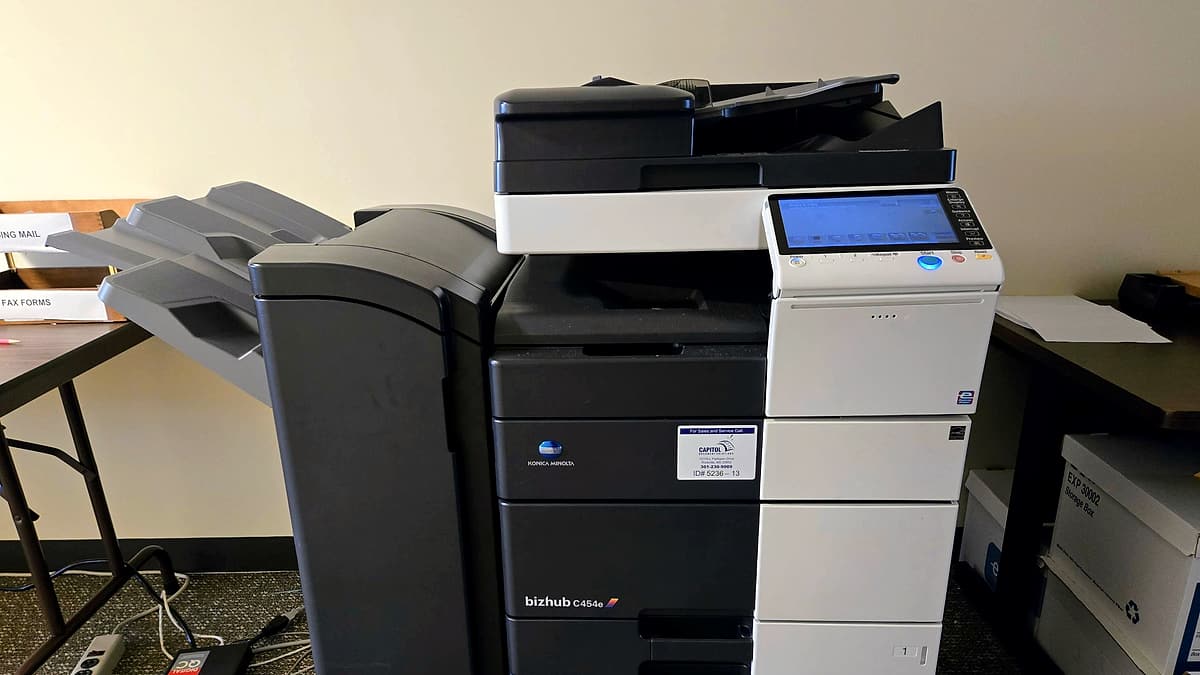
A counterpart produced by the same impression. Carbon copies, and anything struck from the same matrix, which is the old form of the idea.
Any accurate mechanical reproduction. Photocopies, scans and photographs of the document, which is what the category means in practice now.
A printout of stored data. Where information is kept electronically, the printed or displayed output is treated as the original rather than as a copy of it.
Not a retyped version. A transcription is somebody's reading of the document and carries whatever they misread, whatever they silently corrected and whatever they left out. It is evidence of what the transcriber understood, which is occasionally useful and never the same thing as the document.
Not a translation. A translated document is a new writing and is proved with a certification from whoever translated it.
| Situation | Original required | Why |
|---|---|---|
| Proving the wording of a contract | Yes | The contents of the writing are the fact in issue |
| Proving a payment was made | No | The fact is the payment, not the wording of the receipt |
| Proving what a photograph shows | Yes | An image is treated as a writing for this purpose |
| Proving a public register entry | No | A certified copy from the custodian is the standard route |
| Proving stored account data | No | The printout of the stored data is itself the original |
When a duplicate is refused
A genuine question about authenticity. Not a formal objection, but a real reason to doubt that the original said what the copy says.
Circumstances that make it unfair. Where a partial copy is offered and the rest of the document would change its sense.
Where the copy is illegible in the material part. A reproduction that has lost the figure or the signature is not a reproduction of the point in issue.
Where the original is available and simply not produced. The absence of any explanation is itself the problem, and an explanation for a missing original is straightforward to give.
Where the process of copying is itself in question. Selective scanning, cropped images and edited exports each raise a question that the copy by its nature cannot answer, because the missing part is exactly what would settle it. The remedy is the original, or an explanation of how the copy was produced and by whom.
"Best evidence" sounds like a rule about quality, and people invoke it to argue that stronger evidence should have been produced. It is nothing of the kind. It is a narrow rule about proving the contents of writings, and an objection framed as a general complaint about weak evidence will not find a home in it.
Public records and official copies
Public records are proved by certified copy. The original stays in the register, which is where it belongs, and the certified copy is the standard route.
Certification is by the custodian. The officer who holds the record attests that the copy is what the record contains, and signs in that capacity. A certification by anybody else, however senior, does not perform the same function, because the point of the exercise is that the person certifying is the person with the register in front of them.
Foreign public records have their own route. Authentication is by apostille or by consular legalization, covered under documents issued abroad.
A certified copy is not evidence of truth. It establishes the contents of the register and nothing whatever about whether the register is right. Where the entry itself is doubted — a misspelled name, a reported date nobody checked — the certification adds nothing to the argument and the fight moves elsewhere.
Where no certified copy can be obtained. Testimony from somebody who examined the record becomes admissible, on proof that a copy could not be got by reasonable diligence.
The practical effect of the modern rule is that duplicates go in almost always, and the argument moves to weight. That is the right place for it: a legible photocopy of a document nobody disputes is as good as the original for every purpose the hearing has.
Where the original does matter, it matters early. A question about authenticity raised on the day is far harder to answer than one raised in correspondence months before, when the original might still have been produced.
For records held electronically, the concept of an original has quietly dissolved. What exists is stored data, and what is produced is one rendering of it. The useful questions are about the export rather than about which copy is the first one.
Anybody holding a document that might matter should keep it, and should keep it in the form it arrived in. The cost of doing so is nothing, and the cost of not doing so is an argument that could have been avoided entirely.
The rule is also worth invoking sparingly. An objection that the original has not been produced, made in a case where nobody doubts the copy, reads as obstruction and tends to be treated that way. Raised where there is a real question about what the original said, the same objection is one of the strongest available, because it asks for the one thing that would settle the point. Changes made to a document after it was signed raise a further question, taken up in alterations.
Points to carry away
- The original is required only when the contents of the writing are themselves in issue.
- A duplicate is admissible to the same extent as the original in most circumstances.
- A genuine question about authenticity restores the requirement of the original.
- Loss or destruction without bad faith opens the door to other evidence of contents.
- Public records are a separate category, proved by certified copy rather than by the original.
Questions readers ask
Is a scan of a signed contract admissible?
In almost every case, yes. A scan is an accurate mechanical reproduction and therefore a duplicate, and a duplicate is admissible to the same extent as the original unless a genuine question is raised about the original's authenticity or unless it would be unfair to admit it. A formal objection with nothing behind it does not raise such a question. Where the signature itself is disputed, the position changes, because then the appearance of the ink on the page is part of what is being examined.
What happens if the original was thrown away in the ordinary course?
Routine destruction without bad faith does not shut out other evidence of the contents. The party offering the copy explains what happened to the original, and the copy or oral evidence of the contents is then received. What matters is the absence of bad faith: destruction after a dispute has arisen, or after a request to preserve, is a different matter and is treated as spoliation rather than as ordinary housekeeping.
Does the rule apply to text messages and email?
It applies, but usually without difficulty. Where information is stored electronically, any printout or other output that accurately reflects the data is treated as an original rather than as a copy. The real questions about digital material are about completeness and provenance — whether the export covers the whole conversation, and whether the account belonged to the person it is attributed to — and those are authentication questions rather than best evidence ones.
Sources
- Federal Rules of Evidence — Rule 1002, Requirement of the Originallaw.cornell.edu
- Federal Rules of Evidence — Rule 1003, Admissibility of Duplicateslaw.cornell.edu
- Federal Rules of Evidence — Rule 1001, Definitionslaw.cornell.edu
- Federal Rules of Evidence — Rule 1004, Admissibility of Other Evidence of Contentlaw.cornell.edu
- Federal Rules of Evidence — Rule 1005, Copies of Public Recordslaw.cornell.edu
- Legal Information Institute — Best Evidence Rulelaw.cornell.edu
True Justice Record is a publication, not a law firm. This article states general rules and cites its sources; it is not advice about any particular case, and the law differs by state and changes over time.
More in Documents and What They Prove
The Notary's Role, and Its Limits
A notary verifies the identity of a person appearing before them and records the act performed: an acknowledgment that a signature is the signer's own, or an oath supporting a sworn statement. The notary does not read the document for content, does not advise on it, and does not certify that it is valid. Almost every complaint against a notary arises from that gap.
The Document That Contradicts the Record
A conflict between documents is resolved by asking which record was made closest to the event, by somebody in a position to know, for a purpose that made accuracy matter. A later document copying an earlier error is not corroboration. Where the conflict cannot be resolved on those grounds, the honest course is to present both and say which is relied on and why.

Reading a Form Against Its Instructions
The instructions to a form define its terms, list the evidence each answer requires, and state what happens when a question does not apply. A form completed from the printed question alone frequently produces answers that are true in ordinary language and wrong in the agency's usage. Reading the instructions first, and keeping the version used, prevents most of the difficulty.