When a Signature Has to Be Witnessed
Witnessing is the oldest formality attached to a signature and the least understood. It is not a second opinion on the contents, and it is not a substitute for notarization. It answers one narrow question, and only for the instruments that require it.
The rule in short
A witness attests that a named person signed in their presence and appeared able to do so. Wills, deeds and health care directives commonly require witnesses; ordinary contracts generally do not. Who may act is restricted, most often by excluding anybody who benefits under the instrument, and a disqualified witness can void a gift or the instrument itself.
A witness to a signature is doing something narrower than most signers assume. The attestation says that this person signed, in this witness's presence, and appeared capable of the act. It says nothing about what the document contains, and the witness who reads the document is doing so out of curiosity rather than duty.
What a witness attests to
That the signer signed. The core of the attestation, and the reason a witness who did not see the pen move has attested to nothing at all.
That the signer appeared capable. An impression rather than an assessment, but it becomes evidence where capacity is later contested and the witness is the only person who was in the room.
That the signer appeared to act freely. Which is why a witness who noticed somebody standing over the signer is a useful witness rather than an obstructive one.
Not that the contents are true. The witness may never have read a word of the instrument, and in most cases has not. Nothing in the attestation asks them to, which is why a witness is a poor source on what the document actually did.
Not that the signer understood it. Understanding is a separate question with a separate answer, usually proved from the circumstances of the meeting, the advice taken beforehand and the signer's dealings in the same period.
Which instruments require it
Wills, almost universally. Usually two witnesses, present at the same time, signing in the presence of the testator and often of each other. The formalities differ enough between states that the local statute is the only safe guide.
Deeds, in many states. Some require witnesses in addition to acknowledgment before a notary, and some have abolished the requirement entirely.
Health care directives and powers of attorney. Frequently, and often with a choice between witnessing and notarization rather than both.
Not ordinary contracts. A commercial agreement between businesses generally needs no witness at all, which surprises people who witness everything by habit.
Statutory forms say so on their face. Where a form is prescribed by statute, the execution block at the foot of it is part of the prescription. Departing from the printed arrangement invites an argument that nothing in the surrounding law requires anybody to have.
| Instrument | Witnesses commonly required | Notary commonly required |
|---|---|---|
| Will | Two | No, though a self-proving affidavit uses one |
| Deed | Varies by state | Yes, for acknowledgment |
| Health care directive | Two, or a notary instead | Sometimes, as an alternative |
| Financial power of attorney | Often one or two | Usually |
| Ordinary commercial contract | None | No |
Who is disqualified from acting
Anybody who benefits. The interested witness rule, present in most states, and the single most common reason an execution fails.
The spouse of a beneficiary, in many states. The disqualification extends beyond the beneficiary personally, which catches households that were trying to be helpful.
A minor, or somebody who cannot testify. The point of a witness is to be available later, which requires competence at the time of signing.
The notary, in some states. Where notarization and witnessing are both required, one person cannot always perform both roles.
The effect varies. Some states void only the gift to the interested witness, some purge the excess, and a few void the instrument outright, which throws the whole question back onto whoever carries the burden of establishing that it was validly made.
The people most willing to witness a document are the people most likely to be named in it. Where an instrument may confer a benefit, the safest course is to use witnesses who take nothing under it and are not married to anybody who does.
Presence, and what it has come to mean
Line of sight, traditionally. The witness must be able to see the act, which is why signing in an adjoining room has failed more than one will.
Conscious presence, in some states. A relaxed test asking whether the signer was aware of the witness's presence, satisfied through a doorway or by sound.
Remote execution, where authorized. A number of states now permit witnessing by live audio-visual link, subject to identification, recording and retention conditions.
The order of signing matters. Where the statute requires the witnesses to sign after the testator, doing it the other way around is a defect on the face of the document.
Attestation clauses help. A clause reciting that the formalities were observed creates a presumption in many states and costs nothing to include.
What goes wrong, and what can be done
A beneficiary signs as witness. Usually discovered when the instrument is produced, by which time the signer is not available to execute a fresh one.
A witness cannot be found. Which is why full names and addresses printed beside each signature are worth considerably more than the signatures alone, and why an affidavit about a document that cannot be produced so often turns on whether anybody wrote the witnesses down.
The witness has no memory of it. Common, and not usually fatal. An attestation clause and the witness's own signature carry the point in most states, because the question is what the document records rather than what anybody now recalls about an afternoon years ago.
Harmless error statutes. A growing number of states allow a court to give effect to an instrument despite a defect, on clear and convincing evidence of intent.
Nothing cures an absent signature. A witness line left blank is not a technicality that can be argued away by producing secondary evidence of what the document said, because the defect is in the execution rather than in the record of it.
The formality survives because it addresses a risk nothing else addresses. A notary confirms identity; a witness confirms that the signing happened in company, which is the practical guard against a document produced by somebody who was alone with a vulnerable signer.
Because the requirements are creatures of state statute, the only reliable approach is to read the statute that governs the instrument rather than to apply a general habit. Witnessing everything is harmless; witnessing nothing is not; witnessing with the wrong person is worse than either.
Where an execution has already gone wrong, the first question is what the local rule does about it. The range runs from voiding a single gift to voiding the whole instrument, and a defect that is fatal in one state is curable next door.
The most useful thing a witness can do costs nothing: print the name, add an address, and note the place. A witness who can be found years later is worth a great deal more than a signature nobody can attach to a person.
Points to carry away
- A witness attests to the act of signing, not to the contents of the document.
- Requirements attach to particular instruments, not to signatures generally.
- An interested witness is disqualified in most states, sometimes voiding the gift.
- Presence means what the statute says it means, and remote execution has its own rules.
- A failed attestation can be cured in some states and is fatal in others.
Questions readers ask
Can the same person notarize and witness a document?
Sometimes, and it depends entirely on the state and the instrument. Several jurisdictions expressly permit a notary to serve as one of the required witnesses; others treat the two roles as incompatible, on the view that the notary's function is to observe the transaction as a whole rather than to participate in it. Because the consequence of getting it wrong can be the failure of an execution, this is one of the questions worth answering from the governing statute rather than from general practice.
Does a witness have to read the document?
No. The attestation is about the act of signing, not about the contents, and a witness who has not read a line of the instrument has attested to everything the law asks of them. There is one practical qualification: a witness who has some sense of the occasion is a far better witness later, because questions about capacity and pressure are answered from impressions of the room rather than from the text. Reading the document is unnecessary; being present and attentive is not.
What happens if a witness dies before the document is needed?
Very little, in most cases. An attestation clause reciting that the formalities were observed creates a presumption of due execution in many states, and the surviving witness or evidence of the deceased witness's handwriting is generally enough to complete the proof. The difficulty arises where both witnesses are unavailable and the instrument carries no attestation clause, which is one reason such clauses are included as a matter of routine even where no statute requires them.
Sources
- Legal Information Institute — Estate Planninglaw.cornell.edu
- Legal Information Institute — Notary Publiclaw.cornell.edu
- Legal Information Institute — Affidavitlaw.cornell.edu
- Federal Rules of Evidence — Rule 902, Evidence That Is Self-Authenticatinglaw.cornell.edu
- Uniform Law Commission — Fiduciary Access to Digital Assetsuniformlaws.org
- 28 U.S. Code § 1746 — Unsworn Declarations Under Penalty of Perjurylaw.cornell.edu
True Justice Record is a publication, not a law firm. This article states general rules and cites its sources; it is not advice about any particular case, and the law differs by state and changes over time.
More in Documents and What They Prove
The Notary's Role, and Its Limits
A notary verifies the identity of a person appearing before them and records the act performed: an acknowledgment that a signature is the signer's own, or an oath supporting a sworn statement. The notary does not read the document for content, does not advise on it, and does not certify that it is valid. Almost every complaint against a notary arises from that gap.
The Document That Contradicts the Record
A conflict between documents is resolved by asking which record was made closest to the event, by somebody in a position to know, for a purpose that made accuracy matter. A later document copying an earlier error is not corroboration. Where the conflict cannot be resolved on those grounds, the honest course is to present both and say which is relied on and why.
Reading a Form Against Its Instructions
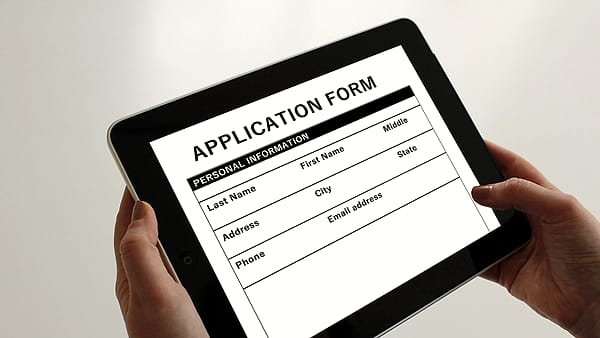
The instructions to a form define its terms, list the evidence each answer requires, and state what happens when a question does not apply. A form completed from the printed question alone frequently produces answers that are true in ordinary language and wrong in the agency's usage. Reading the instructions first, and keeping the version used, prevents most of the difficulty.