Affidavits of Lost Documents
Swearing that a document is lost sounds like a formality and is a piece of evidence with requirements. It has to identify the document, describe the search, and explain the loss with enough detail that somebody could check it.
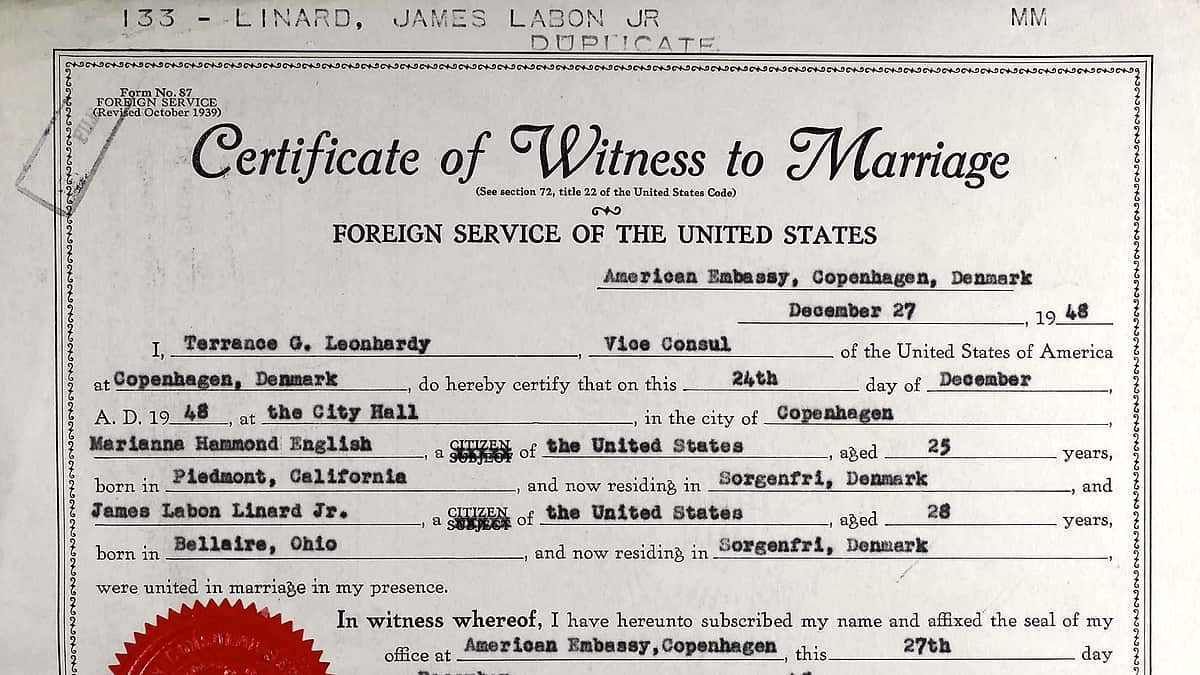
The rule in short
A declaration of loss establishes the unavailability that secondary evidence depends on. It must identify the document precisely, state what it contained, describe how it was lost and set out the search undertaken. Statements that assert loss without specifics fail, and where the declarant is not the person who lost the document, that has to be explained.
A declaration of loss is the document that unlocks the secondary evidence route. It is treated as evidence rather than as a formality, and the ones that fail do so for consistent and avoidable reasons.
What the declaration has to establish
That the document existed. The starting point, which sounds obvious and requires the declarant to say how they know it existed and what it was.
What it contained. A description of the document's nature and terms, in enough detail that a reader knows what is being replaced.
That it is genuinely unavailable. The central purpose, and the part most often asserted rather than evidenced.
How it was lost. The circumstances, dated as closely as possible, because a specific account is checkable and a vague one is not.
What search was made. Where the declarant looked, when, and what each attempt produced, which is the substance of diligence.
That the loss was not deliberate. Where relevant, addressing this directly is better than leaving it as an open question, per spoliation and missing evidence.
The declarant's basis of knowledge. Whether they held the document, saw it, or are speaking from what somebody else told them.
Describing the search properly
Name the places searched. Specific locations, offices and files rather than a general statement that a thorough search was carried out.
Include the institutions asked. Requests to registries, banks and other holders, with the dates and the responses received.
Attach the correspondence. Letters and emails showing what was requested and what came back are worth more than any description of them.
Say who searched. The declarant personally, or somebody else on their behalf, and in the second case how the declarant knows what was done.
Give the dates. A search conducted years ago may not reflect the current position, and a recent one carries more.
State what was found instead. Partial material, indexes or related records located during the search are relevant and should be mentioned rather than omitted.
Say what has not been searched. Where a possible location was not checked, and why, saying so is better than allowing a reader to identify the omission themselves.
| Element | Weak version | Strong version |
|---|---|---|
| The document | An important letter | Named, dated, described |
| The loss | It cannot be found | Circumstances and date |
| The search | A thorough search was made | Places, dates, responses |
| Knowledge | Unstated | Held it personally |
| Support | None | Correspondence attached |
Form and formalities
Follow the prescribed form. Where a forum specifies wording or a format, using it avoids a rejection that has nothing to do with the substance.
Swearing or declaration. Some systems require an oath before an authorized person and others accept a declaration under penalty, and the difference matters.
Identify the declarant fully. Name, address, capacity and relationship to the document, so a reader knows who is speaking and why they would know.
Sign and date it. An undated declaration cannot be placed in the sequence of events at all, and an unsigned one is not really a declaration.
Attach identification where required. Some forums expect an identity document alongside a sworn statement, and supplying it preempts a request that would otherwise arrive.
Translation where needed. A statement in another language needs certified translation, per certified translation and who may certify it.
One declarant per statement. Joint declarations blur whose knowledge supports which fact, and separate statements from each person are clearer and harder to attack.
Notarization is limited. A notary confirms who signed, not that the account is true, per the notary's role and its limits.
The phrase a thorough search was carried out appears in most failed declarations and in almost no successful ones. Naming the places, the dates and the institutions asked, and attaching what came back, is what converts an assertion into evidence of unavailability.
Why declarations fail
Generic assertions. A statement that a document was lost and cannot be found, without more, establishes nothing that a reader can assess.
No search described. The most common defect, and the one that most directly defeats the purpose of the declaration.
Vagueness about the document. Where the declaration cannot say what the document was or what it contained, a reader cannot tell what is being replaced.
A declarant without knowledge. Somebody swearing to a loss they know about only second-hand needs to say so, and the statement is weaker for it.
Inconsistency with other material. A declaration that conflicts with dates or facts elsewhere in the file undermines both, per the document that contradicts the record.
Timing that raises questions. A loss discovered exactly when the document became inconvenient invites a question that the declaration itself should address directly.
Argument in place of facts. A declaration that spends its length explaining why the missing document mattered has not spent it establishing that the document is missing.
Where the declaration belongs
Place it before the substitutes. The declaration explains why the substitute is being offered, and it belongs ahead of the substitute in the file.
Attach the search correspondence. The declaration describes the search and the documents behind it are what evidence it.
Add a certificate of non-availability where one exists. An institutional statement that no record exists is stronger than a personal one and should accompany it.
Keep it factual. A declaration is not the place for argument about what the document proved, and mixing the two weakens it.
Update it if the position changes. Where a further search is made or material is located, the declaration should reflect the current position.
Do not overreach. The declaration establishes unavailability, and asserting what the lost document proved within it confuses two entirely separate questions.
Expect it to be tested. A declaration is evidence like anything else, and its author may be asked about the search, which is a reason to describe only what they actually did.
A declaration of loss is evidence rather than a formality, and it exists to establish the unavailability on which the whole secondary evidence route depends.
It has to identify the document specifically, describe what it contained, explain how and when it was lost, and set out the search in enough detail that somebody could verify it.
The search description is where most declarations fail. Naming places, dates, institutions and responses, with the correspondence attached, is what distinguishes a usable statement from a form of words.
The declarant's own basis of knowledge matters. Somebody swearing to a loss they know about second-hand should say so, and the statement carries correspondingly less.
In a file the declaration belongs ahead of the substitutes it justifies, accompanied by the search correspondence and by any institutional certificate of non-availability that could be obtained.
Points to carry away
- The declaration establishes unavailability, not contents.
- The document must be identified specifically.
- The search has to be described, not merely asserted.
- How and when the loss occurred matters.
- The declarant's own knowledge is the foundation.
Questions readers ask
What makes a declaration of loss fail?
Most often the search description. A statement that a thorough search was made, without naming where the declarant looked, when, which institutions were asked and what those institutions said, gives a reader nothing to assess and establishes nothing about unavailability. The other common failures are vagueness about what the document actually was, and a declarant who is swearing to a loss they only know about from somebody else without saying so.
Who should make the declaration?
Ideally the person who held the document and can speak to its loss from their own knowledge. Where that person is unavailable, somebody else may make it, and the declaration should then say explicitly how the declarant knows what they are describing and from whom. A statement made without that acknowledgment, which reads as first-hand knowledge but is not, is a serious defect. Where an institution can issue a certificate of non-availability, it should accompany any personal declaration.
Should the declaration say what the lost document proved?
It should describe what the document was and what it contained, so that a reader knows what is being replaced, and it should stop there. Argument about what the document established, and why that matters to the case, belongs elsewhere in the filing. A declaration that mixes a factual account of loss with advocacy about significance weakens the factual part, which is the part that has to be accepted before anything else in the secondary evidence application can proceed.
Sources
- Federal Rules of Evidence — Rule 1004, Admissibility of Other Evidence of Contentlaw.cornell.edu
- 28 U.S.C. 1746 — Unsworn Declarations Under Penalty of Perjurylaw.cornell.edu
- Federal Rules of Evidence — Rule 803(10), Absence of a Public Recordlaw.cornell.edu
- Federal Rules of Evidence — Rule 602, Need for Personal Knowledgelaw.cornell.edu
- USCIS Policy Manual — Evidenceuscis.gov
- Federal Rules of Civil Procedure — Rule 56(c)(4), Affidavits or Declarationslaw.cornell.edu
True Justice Record is a publication, not a law firm. This article states general rules and cites its sources; it is not advice about any particular case, and the law differs by state and changes over time.
More in When the Proof Does Not Exist

Delay, Memory and What Is Recoverable
Delay affects evidence unevenly. Volatile electronic material is overwritten within weeks, institutional records survive for defined retention periods, and public registers persist for decades. Memory declines continuously while confidence does not, which is why late accounts can be both detailed and unreliable. Knowing the decay rates determines what to secure first.
Preserving Proof Before It Is Needed
Evidence problems are usually created long before anybody anticipates a dispute. Keeping originals, documenting arrangements when they are made, using traceable payments, obtaining records while institutions still hold them and writing brief contemporaneous notes prevent most of the difficulties that later require reconstruction, secondary evidence or explanation.

Evidence Destroyed by Somebody Else
Where an opponent destroyed evidence after a duty to preserve arose, remedies including inferences, exclusions and sanctions become available. Where a third party or an accident destroyed it, the secondary evidence route applies instead. In every case the first task is proving what the material was, that it existed and that it is genuinely gone.