Attachments, Exhibits and What Travels With a Filing
Attachments are the least glamorous part of any filing and the part that fails most often. A document that is not identified, not numbered and not fastened to the thing it belongs to becomes, within weeks, a loose page that nobody can place.
The rule in short
An exhibit needs three things: an identifier that appears on the exhibit itself, a reference in the document it supports, and a physical or electronic association strong enough to survive handling. Where any of those is missing, the attachment stops being evidence of anything in particular and becomes a page somebody has to argue about instead.
Every attachment is a small promise that the reader will be able to find the right page. The promise is broken by the same handful of failures every time, and each of them is avoidable at the cost of a few minutes at the point the filing is assembled rather than a few hours when somebody asks which document was meant.
What an exhibit needs to be an exhibit
An identifier on the document itself. Marked on the exhibit, not only in the index. A page carrying no mark is a page that cannot be placed once it has been separated from the bundle, and pages do get separated.
A reference in the supporting document. The witness statement or application refers to the exhibit by its identifier at the point where it matters, so that a reader can move between the two without searching.
A description in an index. Enough to identify the document without opening it: what it is, who made it, and what it is being offered to establish, in one line each.
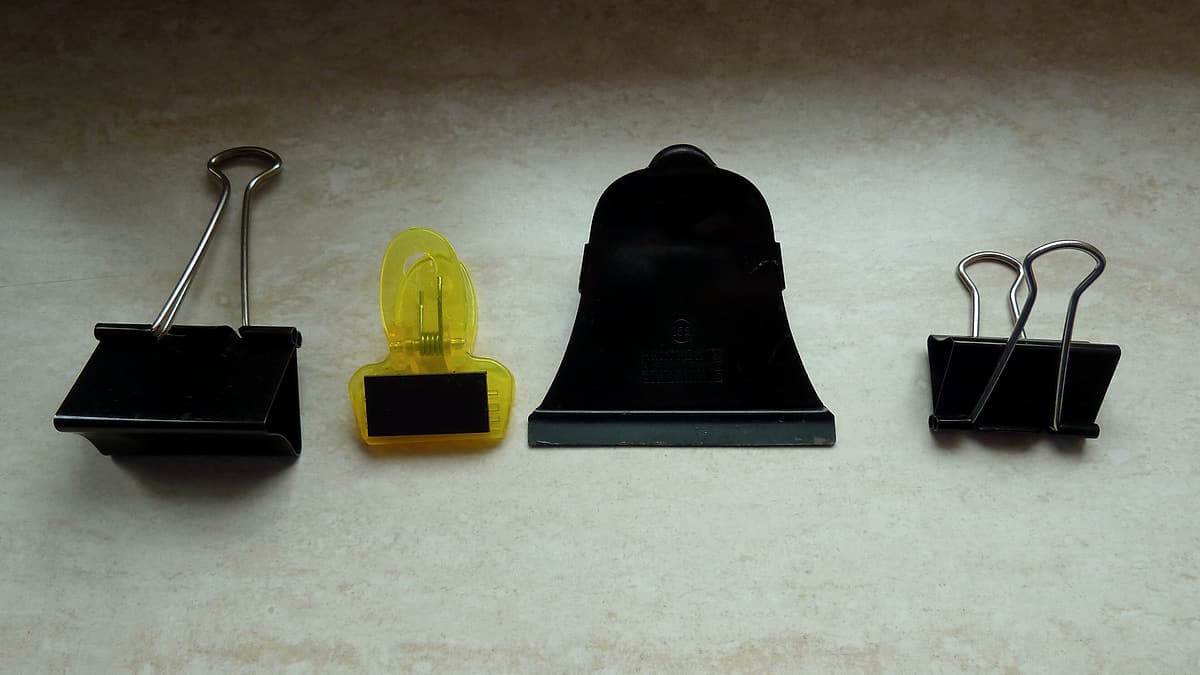
A physical or electronic association. Tabs, a binding, a single combined file. Loose pages in a folder are not attached to anything and will not stay in order through two readings.
Consistency of pagination. One sequence running through the whole bundle, so that a reference to a page number is unambiguous even where exhibits carry their own internal numbering.
Numbering that survives handling
One sequence per filing. Restarting the numbering for each witness, or for each category of document, produces three documents all called exhibit four and a correspondence about which one was meant.
Never reuse a number. If an exhibit is withdrawn, the number goes with it. Reusing it means that everything written about exhibit nine before the change now refers to something else entirely.
Numbers rather than descriptions. References in the body should use the identifier, because a reference to "the bank letter" fails as soon as a second bank letter enters the bundle.
Sub-numbering for related documents. A run of statements from one account is easier to handle as a single exhibit with internal numbering than as fifteen separate exhibits.
Say what the numbering means. A one-line note at the front explaining the convention costs nothing and prevents a reader inventing a different interpretation of it.
| Failure | Consequence | Prevention |
|---|---|---|
| Exhibit not marked | Page cannot be identified once loose | Mark the exhibit itself, not only the index |
| Numbering restarted per witness | Several documents share one number | One sequence for the whole filing |
| Partial document attached | The missing pages become the issue | Attach the whole document or explain |
| No index | Reader searches instead of reading | One line per exhibit at the front |
| Retained copy differs from the one sent | No way to establish what arrived | Copy the bundle after assembly, not before |
What goes wrong with attachments
The exhibit was never marked. So the page is genuine, relevant and unusable, because nobody can establish that it is the page the statement referred to.
Two versions of the same document. One clean, one annotated, both attached at different points, and the difference becomes the subject rather than the document.
A partial document. The first two pages of a five-page letter, attached because those were the pages on the desk, which raises the question of what the other three said.
An attachment nobody can read. A photograph reduced to a thumbnail, a scan at an angle, or a spreadsheet printed so small the figures are illegible, which is covered in why screenshots prove so little.
An untranslated document. Attached in its original language with no certification, which in most proceedings means the reader is entitled to disregard it entirely.
A bundle without an index is read differently from one with an index, because the reader spends attention on navigation rather than on content. That is a real cost, paid by the party who assembled the bundle, and it is avoided by a page that takes ten minutes to write.
Electronic bundles, and what changes
Pagination becomes essential rather than helpful. In a single combined file the page number is the only reliable coordinate, because internal numbering scattered through the exhibits contradicts itself.
Bookmarks replace tabs. A navigable index inside the file does the work that projecting tabs did, and its absence in a bundle of several hundred pages makes the bundle close to unusable.
Text has to be searchable. A bundle assembled from photographs of pages carries no text layer, so nothing in it can be found except by scrolling through the whole thing.
File names carry meaning. Where exhibits are filed separately rather than combined, the file name is the identifier, and a folder of files called scan001 defeats the exercise entirely.
Metadata travels with the file. Which is usually helpful and occasionally not, and is worth understanding before sending, as what metadata actually records sets out.
Assembling a bundle that works
Start from the list, not the pile. Write the index first, from the argument, and then find the documents. Working from the pile produces a bundle organized by what happened to be in the drawer.
Include what is unhelpful. A bundle containing only supportive documents invites the question of what was left out, and the answer is usually more damaging than the document would have been. The same reasoning runs through explaining a gap honestly.
Check every reference. Each mention of an exhibit in the body should be followed to the exhibit itself, once, before the filing goes anywhere. This catches most numbering errors in a single pass.
Keep an identical copy. The copy retained has to be the copy sent, page for page, or every later discussion about what the other side received becomes unresolvable.
Record how it was sent. The transmission record, the covering letter and the date are part of the filing, and become the evidence in any dispute about whether it arrived.
Attachments are treated as clerical work and are not. The decision about what goes into a bundle is a decision about what the decision-maker will read, and it is made by whoever assembles it, usually without much thought about the consequence.
The most damaging failure is also the quietest: a bundle that contains only the helpful documents. Nobody objects at the time, and the omission surfaces later in a form that is much harder to answer than the document itself would have been.
For anything likely to be read by more than one person, or to be read more than once, the effort spent on identification pays for itself immediately. A reader who can find a page is a reader who is still thinking about the argument.
The electronic version of all this is the same exercise with different tools. Bookmarks instead of tabs, a text layer instead of legibility, file names instead of markings, and the same underlying question: can somebody else find the page that was meant. Where the document is a form rather than a free-standing instrument, its own instructions govern what belongs with it, per reading a Form Against Its Instructions.
Points to carry away
- An exhibit carries its own identifier, marked on the exhibit itself.
- The supporting document refers to the exhibit by that identifier.
- Numbering runs in one sequence and is never reused within a filing.
- Pagination across the whole bundle prevents arguments about what was sent.
- An index is part of the filing rather than a courtesy.
Questions readers ask
Does an exhibit have to be marked on the document itself?
It is not always formally required, and it is always worth doing. Bundles are taken apart, photocopied in sections and reassembled, and a page carrying no marking cannot be put back where it belongs or identified once it is loose. Marking the exhibit itself also removes an argument that occasionally matters a great deal: whether the page now produced is the page that was originally attached, or a different copy of the same document substituted at some later point.
Should unhelpful documents be included in a bundle?
Generally yes, where they are part of a sequence that is being relied on or where their absence would be noticeable. A bundle containing one side of a correspondence invites the question of what the replies said, and the question is asked in circumstances far worse than simply including them. The exception is material that is genuinely irrelevant: a bundle is not improved by volume, and padding it with documents nobody needs has its own cost.
What is the right way to attach a document in a language other than English?
The original and a certified translation together, with the translation marked as the translation and the certification attached to it. Attaching only the translation invites a challenge that the original says something else; attaching only the original means the reader cannot use it. The certification identifies the translator and states their competence, and without it most proceedings treat the translated text as an assertion by whoever filed it rather than as evidence.
Sources
- Federal Rules of Civil Procedure — Rule 26, Duty to Discloselaw.cornell.edu
- Federal Rules of Civil Procedure — Rule 34, Producing Documentslaw.cornell.edu
- Federal Rules of Evidence — Rule 1006, Summaries to Prove Contentlaw.cornell.edu
- Federal Rules of Evidence — Rule 901, Authenticating or Identifying Evidencelaw.cornell.edu
- USCIS — Filing Guidanceuscis.gov
- 8 CFR § 103.2 — Applications, Petitions, and Other Documentslaw.cornell.edu
True Justice Record is a publication, not a law firm. This article states general rules and cites its sources; it is not advice about any particular case, and the law differs by state and changes over time.
More in Documents and What They Prove
The Notary's Role, and Its Limits
A notary verifies the identity of a person appearing before them and records the act performed: an acknowledgment that a signature is the signer's own, or an oath supporting a sworn statement. The notary does not read the document for content, does not advise on it, and does not certify that it is valid. Almost every complaint against a notary arises from that gap.

The Document That Contradicts the Record
A conflict between documents is resolved by asking which record was made closest to the event, by somebody in a position to know, for a purpose that made accuracy matter. A later document copying an earlier error is not corroboration. Where the conflict cannot be resolved on those grounds, the honest course is to present both and say which is relied on and why.

Reading a Form Against Its Instructions
The instructions to a form define its terms, list the evidence each answer requires, and state what happens when a question does not apply. A form completed from the printed question alone frequently produces answers that are true in ordinary language and wrong in the agency's usage. Reading the instructions first, and keeping the version used, prevents most of the difficulty.