A Document With No Date on It
An undated document is not a broken document. It establishes everything a dated one establishes except the one thing its absence removes, and the missing date can almost always be reconstructed from the material that surrounds it rather than from the page itself.
The rule in short
A document without a date still proves its own contents, its authorship and, where the paper is authenticated, its origin. What it cannot do is fix itself in a sequence, which matters wherever the order of events decides the outcome. The date is then established circumstantially, from the file it sits in, the events it mentions, the paper it is printed on and the people who handled it.
An undated page arrives and somebody announces that it is useless. It rarely is. The absence removes exactly one thing, and that thing can usually be supplied from elsewhere. The important discipline is to notice which arguments in a case actually depend on when the document was made, because most of them do not.
What is lost, and what is not
The contents survive intact. Every word on the page is as good as it ever was, and a document that records an agreement records it whether or not anybody typed a date at the top of the sheet.
The authorship survives. Handwriting, letterhead, a signature block and the style of the drafting all point at an author, and none of them depends on a date being present.
The place in a sequence is gone. Which matters wherever the case turns on order: who knew what first, which version prevailed, whether a notice preceded a deadline or followed it.
Only some arguments need the order. A contract that is not disputed as to terms rarely needs a date at all, and a great deal of energy goes into dating documents nobody was going to sequence.
Authentication is unaffected. The rules on authentication ask whether the item is what it claims to be, and a date is no part of that question, as set out in what a document actually proves.
Dating from the document itself
Events mentioned inside it. A reference to something that happened fixes the earliest possible date, and a failure to mention something obvious often fixes the latest.
Names and titles. A person described by an office they held only for a period places the document inside that period, and organizational changes do the same work.
Forms, references and version numbers. Printed forms carry revision codes, and an obsolete revision is a firm ceiling on when the document could have been completed.
Addresses and contact details. A telephone format, an office address or a postal code that changed at a known point narrows the window considerably.
The physical object. Paper stock, watermarks, printer characteristics and ink all carry information, though establishing it usually requires somebody who examines documents professionally.
| Source of a date | Applied by | How easily disputed |
|---|---|---|
| Typed on the document | The author | Easily, if the author is interested |
| Received stamp | The recipient organization | With difficulty |
| Postmark on the envelope | The postal service | With great difficulty |
| File metadata | The system, automatically | Only by challenging the system clock |
| Recollection of a signer | A person, years later | Very easily |
Dating from the surroundings
The file it was found in. Documents kept in date order, or in a folder opened and closed on known dates, inherit a range from their neighbors in the drawer.
The covering letter. A great many undated documents traveled with something dated, and the two are frequently still stapled together in somebody's file.
The recipient's records. A copy in another organization's file often carries a received stamp, which is a date somebody else applied and is correspondingly harder to dispute.
Metadata, where a digital original exists. Creation and modification times survive on the file even where the printed page carries nothing, and are covered in what metadata actually records.
The people who handled it. Somebody typed it, somebody filed it, somebody posted it, and any of them may be able to place it within a period even if not on a day.
Before spending anything on dating a document, ask what turns on the date. In a surprising number of files the answer is nothing, and the exercise was set in motion by the discomfort of seeing a blank line rather than by any argument that needed filling in.
When the absence is deliberate
Undated by design. Some instruments are drafted without a date so that they can be dated on execution, which is ordinary practice and not sinister.
Left blank and never completed. The commonest cause of all, and the least interesting: a template with a blank line on it that nobody remembered to fill in while everybody was concentrating on the signature.
Deliberately omitted. Occasionally a signer leaves the date off precisely so that the document can be placed wherever it later suits somebody, which is a serious problem.
Undated because it is a draft. Working versions frequently carry no date at all, which is itself a useful signal about what the document in hand actually is and how much weight it can carry.
The distinction matters to weight. A decision-maker treats an oversight and a deliberate omission very differently, and the surrounding evidence usually indicates which is which.
What not to do about it
Do not add a date now. Writing a date onto an old document turns a mild evidential inconvenience into an allegation of falsification, and the age of the ink relative to the rest of the page is examinable.
Do not date it by assumption. A best guess written into a schedule or a witness statement hardens into an asserted fact, and asserting one that is wrong is worse than admitting uncertainty.
Do not discard the envelope. A postmark is a date applied by a third party with no interest whatever in the dispute, which is the most useful kind of date there is and the one most often thrown away.
Do state the uncertainty plainly. A statement that the document is undated and can be placed between two known points is credible; a false precision is not, as explaining a gap honestly sets out.
Do look for the counterpart. Where two copies were signed, the other side's copy may carry the date that this one lacks, and asking for it costs nothing.
The instinct that an undated document is defective comes from ordinary office habit rather than from any rule of evidence. Nothing requires a private document to carry a date, and a great many perfectly effective instruments do not.
Where the date does matter, the reconstruction is almost always circumstantial, and circumstantial dating can be extremely tight. Two fixed points either side of the document, each established independently, will often narrow the window to a few days without anybody having to remember anything.
The evidence for that reconstruction is fragile in a particular way: it consists of envelopes, covering letters, file order and the recollection of whoever handled the paper. All of it degrades quickly, and most of it is thrown away by people who have no idea it matters.
Where a document is being drafted now and the date is genuinely unknown at the time of signing, the honest solution is a recital saying so. A document that records the circumstances of its own execution is far stronger than one that quietly leaves a gap for somebody to fill in later.
Points to carry away
- An undated document proves its contents and its author exactly as a dated one does.
- Only the position of the document in a sequence is lost.
- Placement in time is reconstructed from context rather than from the page.
- A missing date is sometimes deliberate and sometimes simply an oversight.
- Adding a date afterward creates a far worse problem than the absence did.
Questions readers ask
Is an undated contract binding?
Generally yes. Very few contracts require a date as a matter of validity, and an agreement is formed by offer, acceptance and consideration rather than by anybody writing a date at the top. What the absence affects is proof rather than validity: where performance obligations run from a particular day, or where a limitation period is measured from formation, the missing date has to be established by other evidence before those questions can be answered at all.
How is a document dated from its paper?
By examining features that changed at known points: the manufacturer's watermark, the composition of the stock, the presence of optical brighteners, and the characteristics of the printing or typewriting. A document examiner can often establish that a sheet could not have been produced before a particular point, which sets a floor. Establishing a ceiling from the paper alone is much harder, because old stock stays in cupboards for years and gets used long after it was bought.
Does adding a date later amount to forgery?
It can, and the risk is not worth taking. Writing a date onto a document after the event, in a way that presents it as contemporaneous, is a false statement made on the face of an instrument, and where it is done to affect a proceeding it may attract serious consequences. The safe course, if a date has to be recorded now, is a separate signed note explaining when and by whom the entry was made and on what basis.
Sources
- Federal Rules of Evidence — Rule 901, Authenticating or Identifying Evidencelaw.cornell.edu
- Federal Rules of Evidence — Rule 803, Exceptions to the Rule Against Hearsaylaw.cornell.edu
- Federal Rules of Evidence — Rule 406, Habit; Routine Practicelaw.cornell.edu
- Legal Information Institute — Circumstantial Evidencelaw.cornell.edu
- Legal Information Institute — Forgerylaw.cornell.edu
- 18 U.S. Code § 1001 — Statements or Entries Generallylaw.cornell.edu
True Justice Record is a publication, not a law firm. This article states general rules and cites its sources; it is not advice about any particular case, and the law differs by state and changes over time.
More in Documents and What They Prove
The Notary's Role, and Its Limits
A notary verifies the identity of a person appearing before them and records the act performed: an acknowledgment that a signature is the signer's own, or an oath supporting a sworn statement. The notary does not read the document for content, does not advise on it, and does not certify that it is valid. Almost every complaint against a notary arises from that gap.

The Document That Contradicts the Record
A conflict between documents is resolved by asking which record was made closest to the event, by somebody in a position to know, for a purpose that made accuracy matter. A later document copying an earlier error is not corroboration. Where the conflict cannot be resolved on those grounds, the honest course is to present both and say which is relied on and why.
Reading a Form Against Its Instructions
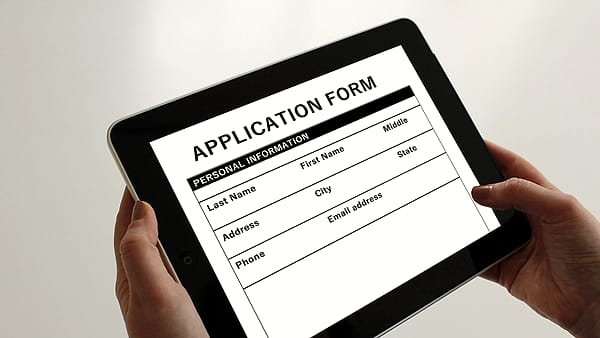
The instructions to a form define its terms, list the evidence each answer requires, and state what happens when a question does not apply. A form completed from the printed question alone frequently produces answers that are true in ordinary language and wrong in the agency's usage. Reading the instructions first, and keeping the version used, prevents most of the difficulty.