Step-Relationships and When They Count
A step relationship is created by somebody else's marriage, which makes it unusual among family relationships: it depends on a document between two other people, and the conditions attached to it are about dates rather than about the relationship itself.

The rule in short
Step relationships arise where a parent marries somebody who is not the child's other parent. Most frameworks impose an age condition, requiring the marriage to have taken place before the child reached a defined age, and many require the marriage itself to be valid and subsisting. Whether the relationship survives divorce or death depends entirely on the provision being used.
Step relationships are established almost entirely by dates. When the marriage took place, how old the child was on that date, and whether the marriage was valid decide the question before anybody looks at the family itself.
How the relationship arises
Through a marriage. A step relationship is created when a parent marries somebody who is not the child's other legal parent, and it exists by operation of that marriage.
Not by care or upbringing. Somebody who raised a child without marrying their parent has no step relationship, however long and complete the care.
The marriage must generally be valid. An invalid or unrecognized marriage creates no step relationship, which is why validity questions matter here, per marriage records and their gaps.
It arises automatically. No order or registration is needed, and there is usually no document recording the step relationship itself.
Both directions exist. The relationship runs between the child and the parent's spouse in both directions, and either may be the relevant party in a proceeding.
No document records it. There is no certificate of a step relationship, so it is proved by putting a marriage record and a birth record beside one another and reading the dates.
It is distinct from adoption. A step relationship does not change legal parentage, which is the distinction drawn in adoption, guardianship and legal parentage.
The age condition
The marriage date is what counts. Most frameworks ask how old the child was when the marriage took place rather than at any later point.
A defined threshold applies. Provisions commonly require the marriage to have occurred before the child reached a specified age, frequently eighteen.
Being close to the threshold is fatal. A marriage days after the birthday produces no qualifying relationship, and nothing about the family changes that.
The date has to be documented. Both the marriage date and the child's date of birth need reliable records, and a discrepancy between them is a real problem.
Late-registered births complicate it. Where the birth entry was made years afterwards, the recorded date carries the questions discussed in birth records and what they establish.
Check the specific provision. Thresholds and how they are measured differ between frameworks, and assuming that a familiar rule applies is a common and expensive error.
Verify the dates before anything else. Both documents can be checked in an afternoon, and doing so first avoids assembling a file around a relationship that does not qualify.
| Requirement | Usually | Watch for |
|---|---|---|
| Valid marriage | Required | Unregistered ceremonies |
| Child's age at marriage | Below a threshold | Marriage after the birthday |
| Subsisting marriage | Varies | Undisclosed divorce |
| Genuine relationship | Sometimes | No evidence gathered |
| Other parent's consent | Occasionally | Cannot be obtained |
Whether the relationship survives
Divorce may end it. Some provisions treat the relationship as depending on a subsisting marriage, so a divorce removes it entirely.
Others preserve it. Where a genuine relationship continued after the marriage ended, some frameworks allow it to be recognized notwithstanding the divorce.
Death of the parent. The position varies again, and in several systems the relationship survives the death of the biological parent where the connection continued.
Continuing relationship evidence matters. Where survival depends on the relationship having been real and ongoing, that becomes the evidential question.
A stepparent may have remarried. Subsequent marriages of either adult do not usually affect an existing step relationship, though the documents multiply.
Read the provision carefully. This is the area where frameworks differ most sharply, and general expectations about how it ought to work are unreliable here.
Keep the marriage documents either way. Even where a relationship survives a dissolution, the original certificate and the decree are both needed to establish the sequence.
Families arrive with a decade of shared life and discover that the question was whether a wedding happened before a birthday. Where the dates work, very little else is usually needed. Where they do not, no amount of evidence about the relationship changes the answer.
What has to be evidenced
The marriage. A certificate, with the dissolution records for any earlier marriages of both parties, since validity underlies the whole relationship.
The child's parentage. A birth record establishing that the child is the child of the party who married, which is the connecting link.
The dates. Both documents read together should establish that the marriage preceded the relevant birthday, without ambiguity.
The relationship as lived, sometimes. Several frameworks require evidence that a genuine relationship existed, particularly where the marriage has since ended.
Consent from the other parent, occasionally. Some processes require it and others do not, and where required its absence stops everything.
Consistency across the file. Names and dates should match between the birth record, the marriage record and everything else, per proving a relationship on paper.
Common problems
Marriage after the threshold. The single most common failure, and it is not curable by any amount of evidence about the family.
An invalid or unrecognized marriage. Where the marriage does not stand, nothing built on it stands either, and the problem is frequently discovered late.
Assuming care creates the relationship. Families routinely present years of upbringing where the framework asks only about a marriage date.
A divorce nobody mentioned. Where the provision requires a subsisting marriage, a dissolution that was not disclosed ends the matter when it surfaces.
Unregistered marriages. Customary and religious ceremonies that were never registered require the validity question to be addressed before anything else.
Conflicting birth dates. Where documents record different dates and the threshold sits between them, that discrepancy becomes the whole case and needs addressing directly.
Treating it as an adoption. Files sometimes describe a stepparent as having adopted a child when no order exists, which is an inaccuracy that damages everything around it.
A step relationship is created by a marriage rather than by anything the people involved did together, which is counter-intuitive and accounts for most of the disappointment in this area.
The age condition decides the majority of cases. Whether the marriage preceded a defined birthday is a question of two dates, and where it did not, evidence about the family is beside the point.
Validity of the marriage underlies everything. An unregistered ceremony or an earlier marriage that never properly ended removes the foundation, and those problems tend to surface late.
Whether the relationship survives a divorce or a death is where frameworks differ most sharply, and it is the question most often answered from general expectation rather than from the provision that applies.
For evidence, the file needs the marriage record, the birth record, the dissolution documents for earlier marriages and, in many situations, material showing the relationship was real and continued.
Points to carry away
- The relationship comes from a marriage, not from care given.
- Age at the date of the marriage is the usual condition.
- The marriage generally has to be valid to create the relationship.
- Survival after divorce or death varies between provisions.
- Evidence of an actual relationship is frequently required as well.
Questions readers ask
Does raising a child create a step relationship?
No. The relationship arises from a marriage to the child's parent, and nothing else creates it. Somebody who raised a child for many years without marrying their parent has no step relationship at all, however complete the care and however the family describes itself. Where a lasting legal relationship is wanted in that situation, the routes available are adoption or, in some contexts, guardianship, and each has its own requirements and consequences that differ substantially from a step relationship.
What happens if the marriage took place after the child's eighteenth birthday?
In most frameworks that imposes a threshold, no qualifying step relationship is created, and the position is not recoverable. The condition is measured against the date of the marriage rather than against any later point, so a ceremony held days after the birthday produces the same result as one held years afterwards. Because the outcome turns entirely on two documented dates, this is worth checking at the very start rather than after a file has been assembled.
Does a divorce end a step relationship?
It depends on the provision, and this is where frameworks differ most. Some treat the relationship as depending on a subsisting marriage, so a dissolution removes it. Others allow the relationship to be recognized after the marriage has ended where a genuine connection continued, in which case evidence of that continuing relationship becomes the central question. The same variation applies where the biological parent has died. Reading the specific provision is essential, because general expectations are unreliable here.
Sources
- 8 CFR 204.2 — Petitions for Relativesecfr.gov
- USCIS Policy Manual — Family-Based Petitionsuscis.gov
- INA 101(b) — Definitions of Childlaw.cornell.edu
- U.S. Department of State — Reciprocity and Civil Documents by Countrytravel.state.gov
- Federal Rules of Evidence — Rule 803(9), Public Records of Vital Statisticslaw.cornell.edu
- Federal Rules of Civil Procedure — Rule 44.1, Determining Foreign Lawlaw.cornell.edu
True Justice Record is a publication, not a law firm. This article states general rules and cites its sources; it is not advice about any particular case, and the law differs by state and changes over time.
More in Proving a Relationship
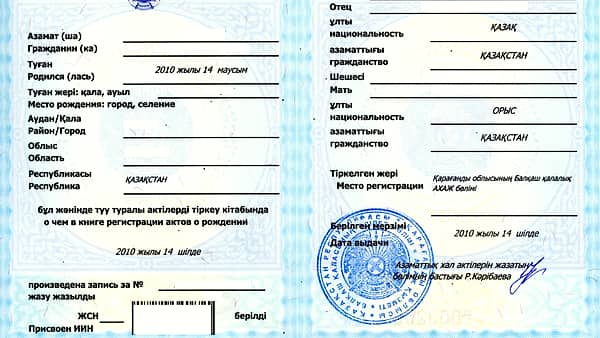
Birth Records and What They Establish
A birth record establishes that a registration was made and what it stated. Contemporaneous entries made by an informant with direct knowledge are close to conclusive. Late registrations, entries based on somebody else's later account, and systems that recorded limited information all support less, and the differences matter when parentage is questioned.
Photographs and Correspondence as Evidence
Photographs show that people were together on particular occasions and correspondence shows that they communicated. Neither establishes the nature of a relationship, and both exist in volumes that make selection visible. Their real value is showing continuity across a period, with dates and context, rather than proving any individual fact.

Affidavits From People Who Knew Them
A useful declaration identifies the writer, explains how they came to know the people involved, and describes specific things they observed with dates and places. Statements that assert conclusions, omit the basis of knowledge, or arrive in identical wording from several people are discounted heavily and can damage a file rather than support it.