Adoption, Guardianship and Legal Parentage
An adoption creates a parent, a guardianship creates a carer with authority, and legal parentage may arise without either. The documents look similar, the consequences are not, and files routinely offer one where another is required.

The rule in short
Adoption transfers legal parentage permanently. Guardianship confers responsibility without changing parentage and usually ends at a defined point. Legal parentage can also arise by registration, acknowledgment or presumption. Which one a document created depends on the law of the place and on what the order actually says, not on the label at the top of the page.
Three things are frequently treated as interchangeable and are not. The question is never what a document is called but what it did: whether it transferred parentage, conferred authority, or recorded a relationship that already existed.
Adoption and what it transfers
It creates a legal parent. A full adoption order transfers parentage permanently, generally severing the previous legal relationship and creating a new one in its place.
The order should say so. Operative wording transferring parental rights and responsibilities is what matters, and a document that only confers care did something else.
Simple and full adoptions differ. Some systems have a form of adoption that does not sever the original relationship, and the distinction affects recognition elsewhere.
Age and timing requirements exist. Many frameworks impose conditions about when the adoption occurred and how long a relationship preceded it, and the dates are checked.
International adoption has its own rules. Conventions and national provisions govern adoptions across borders, and an order made outside them may not be recognized.
The record trail matters. Consents, hearings and the resulting order together establish what happened, and an order standing alone occasionally raises more questions than it answers.
Post-adoption residence conditions. Several frameworks require a period of legal custody or joint residence after the order before the relationship counts, and the dates are checked against the documents.
Guardianship and what it does not do
Authority without parentage. A guardian may make decisions for a child and is not made a parent by the order, however extensive the responsibilities conferred.
It usually ends. Guardianship typically terminates at majority or on a defined event, which distinguishes it from a permanent transfer of status.
It may be revocable. Orders conferring care can frequently be varied or revoked, which is another feature that separates them from adoption.
Kafala and similar arrangements. Some legal systems do not permit adoption and use a care arrangement instead, which is not an adoption however it functions in daily life.
Recognition varies widely. Whether a foreign care arrangement produces any status in another country depends on that country's provisions rather than on the order.
The label is not decisive. Documents titled guardianship sometimes transfer parentage and documents titled adoption sometimes do not, and it is the operative text that governs.
A guardian may still be the right applicant. Some provisions accept a guardian for particular purposes, so the question is which arrangement the requirement asks for rather than which is stronger.
| Feature | Adoption | Guardianship |
|---|---|---|
| Changes parentage | Yes | Generally no |
| Permanent | Yes | Usually time-limited |
| Revocable | Rarely | Frequently |
| Severs prior relationship | Usually | No |
| Recognized abroad | Often, on conditions | Varies widely |
Legal parentage by other routes
Registration at birth. Being named on the birth entry establishes parentage in most systems, which is the ordinary route, per birth records and what they establish.
Acknowledgment after birth. Formal acknowledgment procedures allow a parent to be added later, and the resulting annotation is the evidence of it.
Presumption from marriage. Many systems presume parentage from marriage at the relevant time, discussed in the presumption that starts a case.
Judicial determination. Where parentage is contested, a determination by a court establishes it, and the resulting order is the document to obtain.
Assisted reproduction. Parentage in these situations is governed by specific provisions that vary enormously between jurisdictions and change frequently.
Step relationships are separate. A relationship arising through marriage to a parent has its own rules, covered in step relationships and when they count.
The title of an order is drafting convention; the paragraph stating what it does is the document. An order transferring parental rights and responsibilities changed status. An order appointing somebody to care for a child did not, however comprehensive the powers it granted look on the page.
Reading the order rather than the label
Find the operative words. The paragraph stating what the order does is the whole document for these purposes, and everything else is background.
Look for transfer of parental status. Language about rights, responsibilities and status indicates a transfer; language about care and custody usually does not.
Check for an end date or condition. An arrangement that terminates on an event is not a permanent change of status, whatever it is called.
Note the authority that made it. Whether the body had power to make the order it purports to make is occasionally the question, particularly with administrative decisions.
Get the full order. Summaries and extracts omit the operative wording that matters, and requesting the complete document is worth the delay.
Translate it completely. Operative paragraphs are precisely where a partial or loose translation causes the most damage, per translation as an expert question.
Documenting these relationships
Obtain the underlying file where possible. Consents, reports and hearing records explain what the order was based on and answer questions the order does not.
Authenticate foreign orders. Certification and legalization apply to these documents as to any other, and they take time to arrange.
Address the framework. Where the governing system works differently, an explanation of what its orders do is more useful than the order alone.
Evidence the relationship as lived. Where recognition is uncertain, material showing the actual family life becomes correspondingly more important.
Do not describe a guardianship as an adoption. The mismatch is visible immediately, and it damages credibility across the whole file.
Check the requirement before filing. Different provisions accept different arrangements, and the document that satisfies one may be irrelevant to another.
Adoption, guardianship and legal parentage produce different relationships with different consequences, and the documents evidencing them look similar enough to be offered interchangeably.
What matters is the operative wording. An order transferring parental status did one thing; an order conferring care and authority did another, whatever either document is titled.
Some legal systems have no adoption in the transferring sense at all and use care arrangements instead. Those arrangements are not defective, and they are also not adoptions, and treating them as such creates problems.
Parentage arises by several routes besides adoption: registration, acknowledgment, presumption and judicial determination, each with its own document and its own evidential weight.
Which category an order falls into determines which family provisions are available at all, and a care arrangement offered where a full adoption is required produces a refusal rather than a request for more evidence. Where a case turns on a child brought up by somebody who is not their registered parent, the green card categories, set out one by one set out the green card categories, one by one.
For any file involving these questions, the sequence is to read the requirement, obtain the complete order, translate the operative paragraphs precisely, authenticate the document early, and describe accurately what it did.
Points to carry away
- Adoption changes parentage; guardianship generally does not.
- The order's operative wording matters more than its title.
- Some systems do not have adoption in the transferring sense.
- Parentage may also arise by acknowledgment or presumption.
- Recognition abroad depends on what the order actually did.
Questions readers ask
What is the practical difference between adoption and guardianship?
Adoption transfers legal parentage, generally permanently and usually severing the previous legal relationship. Guardianship confers authority to care for and make decisions about a child without making the guardian a parent, and it typically ends at majority or on some defined event. The consequences differ substantially: adoption creates a relationship that persists and is recognized in many contexts, while a guardianship is an arrangement about responsibility. Documents are sometimes titled in ways that do not match what they actually did, so the operative wording governs.
Why do some countries not have adoption?
Because their legal traditions provide for the care of children through arrangements that do not sever or transfer parentage. Kafala is the most frequently encountered example, and it can function very much like adoption in daily family life while remaining, in legal terms, a care arrangement. This creates real difficulty where another country's provisions require an adoption specifically. The answer is not to describe the arrangement as an adoption but to document precisely what it is, what the governing law says it does, and how the family has actually lived.
How should a foreign order be presented?
Complete, authenticated and fully translated, with the operative paragraphs rendered precisely rather than summarized. Where possible the underlying file should accompany it, because consents, reports and hearing records explain what the order was based on and answer questions the order alone leaves open. Where the governing legal system works differently from the one where the document will be used, an explanation of what its orders actually do is frequently more useful than any amount of additional documentation about the family.
Sources
- Hague Conference — Intercountry Adoption Sectionhcch.net
- U.S. Department of State — Intercountry Adoptiontravel.state.gov
- 8 CFR 204.3 — Orphan Petitionsecfr.gov
- USCIS Policy Manual — Evidenceuscis.gov
- Federal Rules of Civil Procedure — Rule 44.1, Determining Foreign Lawlaw.cornell.edu
- Federal Rules of Evidence — Rule 902, Evidence That Is Self-Authenticatinglaw.cornell.edu
True Justice Record is a publication, not a law firm. This article states general rules and cites its sources; it is not advice about any particular case, and the law differs by state and changes over time.
More in Proving a Relationship
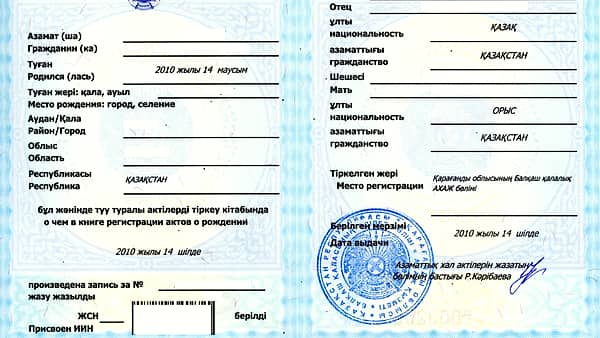
Birth Records and What They Establish
A birth record establishes that a registration was made and what it stated. Contemporaneous entries made by an informant with direct knowledge are close to conclusive. Late registrations, entries based on somebody else's later account, and systems that recorded limited information all support less, and the differences matter when parentage is questioned.

Photographs and Correspondence as Evidence
Photographs show that people were together on particular occasions and correspondence shows that they communicated. Neither establishes the nature of a relationship, and both exist in volumes that make selection visible. Their real value is showing continuity across a period, with dates and context, rather than proving any individual fact.

Affidavits From People Who Knew Them
A useful declaration identifies the writer, explains how they came to know the people involved, and describes specific things they observed with dates and places. Statements that assert conclusions, omit the basis of knowledge, or arrive in identical wording from several people are discounted heavily and can damage a file rather than support it.