Birth Records and What They Establish
A birth certificate looks like the least arguable document in a file, and it records a registration rather than an event. Who reported it, how long afterwards and under what system all bear on what the entry actually establishes.
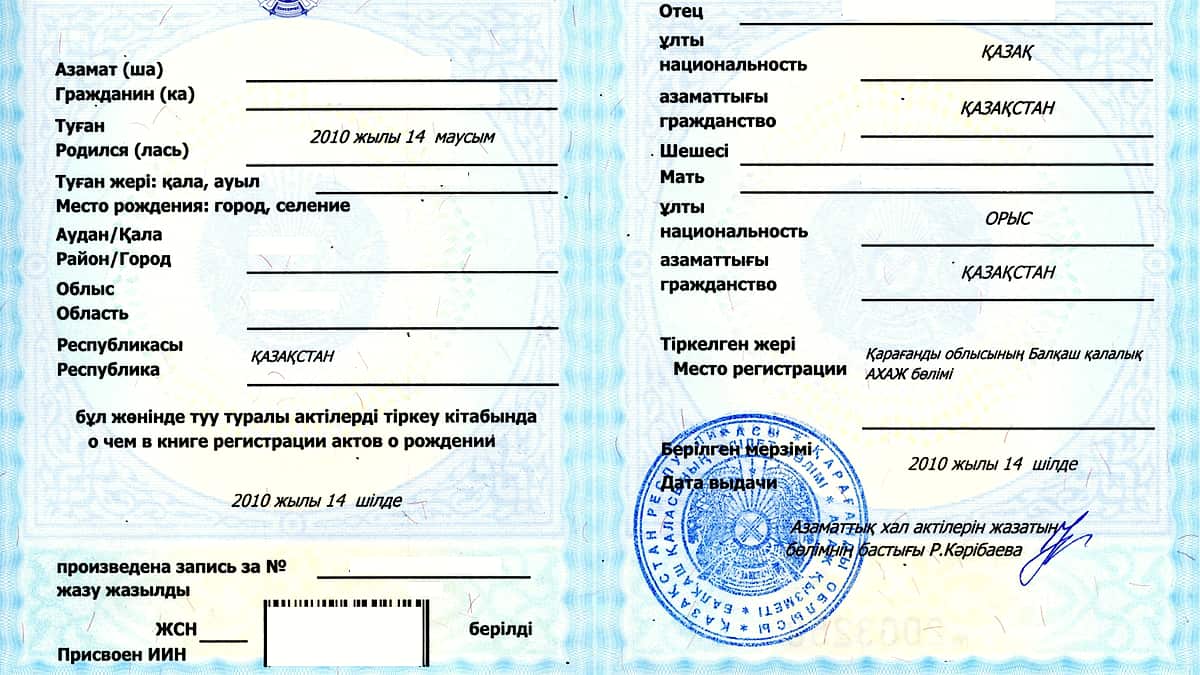
The rule in short
A birth record establishes that a registration was made and what it stated. Contemporaneous entries made by an informant with direct knowledge are close to conclusive. Late registrations, entries based on somebody else's later account, and systems that recorded limited information all support less, and the differences matter when parentage is questioned.
Parties treat a birth certificate as an unarguable fact and it is a record of what somebody told a registrar. Usually that is enough and nobody looks further. Where parentage is contested, everything behind the entry becomes relevant.
What the record actually contains
The registered particulars. Name, date and place of birth, and usually the parents named at registration, which is the information the system was designed to capture.
Short and long forms differ. An extract shows core particulars, while the full entry commonly includes the informant, the registration date and any later annotations.
The registration date is informative. The interval between the birth and the entry is one of the most useful facts on the document and is missing from most short forms.
Annotations record later changes. Corrections, acknowledgments of parentage and adoptions frequently appear as marginal notes rather than as new entries.
Systems capture different fields. Some registries record occupation, address and previous children, and others record almost nothing beyond names and dates.
Names may appear in more than one form. Registries record what was said to them, and a name written differently from the rest of a file needs an explanation rather than an assumption that it will pass.
Certified copies carry the weight. An uncertified photocopy establishes very little, which is the general point made in certified copies and who may issue one.
Timing and the informant
Contemporaneous registration is strongest. An entry made within days by somebody present at the birth is about as good as documentary evidence of an event gets.
Late registration is different. An entry created years afterwards rests on somebody's recollection or on supporting documents, and its weight depends on what those were.
Very late registration invites questions. Registration prompted by a need for the document, decades after the event, is examined more carefully and frequently needs supporting material.
Who informed the registrar matters. A parent, a hospital or a midwife has direct knowledge, while a distant relative reporting years later does not.
Registration requirements varied. Deadlines, penalties and practice differed by country and period, and what looks like a suspicious delay may have been entirely normal.
The long form answers most of this. Where timing or informant is in issue, obtaining the full entry rather than an extract usually resolves it.
| Feature | Effect on weight | Where to find it |
|---|---|---|
| Registered within days | Strongest | Long form entry |
| Registered years later | Depends on basis | Registration date field |
| Informant present at birth | Strong | Long form entry |
| Parent added later | Varies by system | Marginal annotation |
| Short form extract | Limited | Missing key fields |
Parentage on the record
A named parent is strong evidence. In most systems the entry is treated as establishing the relationship unless something specific displaces it.
Not always conclusive. Some systems allow the entry to be challenged by other evidence, and the position varies with how the registration was made.
Presumptions frequently operate. Marriage at the time of birth commonly produces a presumed parentage, discussed in the presumption that starts a case.
Later acknowledgment. A parent added by acknowledgment after registration appears as an annotation, and the process behind it varies considerably.
An absent name is not a finding. A blank where a parent would be recorded reflects who attended the registration rather than any determination about the relationship.
Testing may resolve a dispute. Where the record is genuinely contested, the alternative route is biological, addressed in DNA testing and its place.
The two facts that decide how much a birth entry is worth, the interval between the birth and the registration and the identity of the informant, appear only on the full entry. Short extracts omit both, which is why a file built on them answers fewer questions than it appears to.
When no record exists
Registration was not universal. Many countries and periods had partial coverage, and rural births in particular were frequently unregistered.
Records are destroyed. Conflict, fire, flood and administrative disposal have removed civil registers in many places, sometimes for whole regions.
A certificate of non-availability helps. Many authorities will issue a formal statement that no record exists, which converts an absence into evidence.
Religious and hospital records substitute. Baptismal registers, hospital admissions and school enrollment records frequently predate or replace civil registration.
Secondary evidence rules apply. Systems provide routes for establishing a birth where the primary record is unavailable, per secondary evidence of a birth abroad.
Consistency carries the weight. Several independent documents recording the same date and place establish a birth more convincingly than any single substitute.
Using a birth record in a filing
Obtain the long form. The extra fields answer questions before they are asked, and the cost difference is usually negligible.
Check every field against the file. Names, dates and places should match the rest of the material, and where they do not the discrepancy needs explaining.
Authenticate foreign records early. Certification takes longer than anybody expects, and it is the commonest reason a family filing stalls.
Translate completely. Stamps, annotations and marginal notes are part of the document, and a translation that omits them is defective.
Explain a late registration. A short account of why the entry was made when it was removes the obvious question and costs nothing.
Keep the certified copy intact. Some authorities require an original certified copy rather than a scan, and the requirement is worth checking before anybody travels anywhere with it.
A birth record establishes that a registration was made and what it said, which is usually all anybody needs and is not the same as recording the event directly.
The two facts that determine its weight, the interval between birth and registration and the identity of the informant, appear on the full entry and are missing from most short extracts.
Parentage recorded on the entry is strong evidence in every system and conclusive in only some, and where it is genuinely contested the routes available run through presumptions or through testing.
Where no record exists, the absence is a documentary problem rather than a doubt about the birth. A formal statement of non-availability plus consistent secondary records is the standard answer.
Petitions for children are decided largely on these documents, and a short form extract that omits the registration date is one of the commonest reasons a request for further evidence arrives. Where a filing turns on a child's parentage, counsel who files green card petitions for children know which version of a record each office expects.
For a filing, the practical steps are to obtain the long form, check every field against the rest of the file, authenticate foreign records early, translate the whole document, and explain any late registration in advance.
Points to carry away
- The record proves a registration and its contents.
- Timing between birth and registration affects weight.
- The informant matters, and the long form usually names them.
- A named parent is strong evidence and not conclusive everywhere.
- Registration systems vary by country and by period.
Questions readers ask
Why does the registration date matter so much?
Because it tells a reader what the entry was based on. A registration made within days of a birth reflects direct knowledge from somebody who was there, which is about as reliable as documentary evidence of an event becomes. An entry created fifteen years later rests on somebody's recollection or on supporting documents, and its weight depends entirely on what those were. Short form extracts usually omit the registration date, which is one of the main reasons the full entry is worth obtaining.
Is a parent named on a birth certificate conclusive?
It is strong evidence everywhere and conclusive only in some systems. Most treat the entry as establishing the relationship unless specific evidence displaces it, and the strength of that treatment depends partly on how the registration was made and by whom. Where the entry was created long after the birth, or where a parent was added later by acknowledgment, the position is more open. Where parentage is genuinely disputed and the documents cannot resolve it, biological testing is the usual route.
What can be done when no birth record exists at all?
The first step is obtaining a formal statement of non-availability from the relevant authority, which turns an absence into evidence rather than a gap. After that, secondary material is assembled: baptismal or other religious registers, hospital records, school enrollment documents, census entries and statements from people with direct knowledge. What carries such a file is consistency. Several independent documents recording the same date and place establish a birth far more convincingly than any one substitute does on its own.
Sources
- Federal Rules of Evidence — Rule 803(9), Public Records of Vital Statisticslaw.cornell.edu
- Federal Rules of Evidence — Rule 803(10), Absence of a Public Recordlaw.cornell.edu
- U.S. Department of State — Reciprocity and Civil Documents by Countrytravel.state.gov
- CDC — Where to Write for Vital Recordscdc.gov
- USCIS Policy Manual — Evidenceuscis.gov
- Federal Rules of Evidence — Rule 902, Evidence That Is Self-Authenticatinglaw.cornell.edu
True Justice Record is a publication, not a law firm. This article states general rules and cites its sources; it is not advice about any particular case, and the law differs by state and changes over time.
More in Proving a Relationship
Photographs and Correspondence as Evidence
Photographs show that people were together on particular occasions and correspondence shows that they communicated. Neither establishes the nature of a relationship, and both exist in volumes that make selection visible. Their real value is showing continuity across a period, with dates and context, rather than proving any individual fact.

Affidavits From People Who Knew Them
A useful declaration identifies the writer, explains how they came to know the people involved, and describes specific things they observed with dates and places. Statements that assert conclusions, omit the basis of knowledge, or arrive in identical wording from several people are discounted heavily and can damage a file rather than support it.

Joint Finances as Proof of a Relationship
Joint accounts, shared liabilities and mutual designations are among the most persuasive evidence of a relationship, because third parties verified the arrangements for their own reasons. Their weight comes from duration and from actual use rather than from existence. Couples who keep finances separate are common, and the reason for that should appear in the file.