DNA Testing and Its Place
A test result carries an authority no document matches, and it answers a narrower question than most people assume. Biological connection and legal relationship are not the same thing, and chain of custody decides whether a result is accepted at all.

The rule in short
DNA testing establishes biological relationship with very high confidence, which resolves some questions completely and others not at all. Legal parentage may exist without a biological link and may be absent despite one. Where testing is used, the collection procedure, the accredited laboratory and the documented chain of custody determine whether the result is accepted.
Testing looks like the obvious answer to any question about a family relationship, and it is used sparingly for good reasons. It costs money, takes time, answers only the biological question, and produces nothing usable unless the collection was done properly.
What testing establishes
Biological relationship, with high confidence. Parentage testing produces probabilities that are effectively conclusive when the test is properly conducted between the right people.
Not legal parentage. Adoption, acknowledgment and presumptions all create legal relationships that no biological test can confirm or displace.
Not the absence of a legal relationship. A negative result shows no biological link and says nothing about whether a legal relationship exists through another route.
Parent and child tests are strongest. Direct testing between an alleged parent and child produces the clearest results, and everything else is comparatively indirect.
Sibling tests are much weaker. Establishing that two people share a parent produces probabilities rather than near certainty, and results are frequently inconclusive.
Grandparent and aunt tests weaker still. These are used where a parent is unavailable, and they support considerably less than direct testing between a parent and a child does.
It cannot date a relationship. Testing shows that a biological connection exists and says nothing about when anybody knew, acknowledged or acted on it.
Procedure and chain of custody
Home kits are generally not accepted. A test where the participants collected their own samples proves nothing about who was tested, which is the whole point of the exercise.
Identity verification at collection. Samples must be taken by an authorized collector who verified identity documents and recorded what they saw.
A documented chain. Every transfer of the sample between collection and analysis needs recording, which is the general principle described in preserving a device before it changes.
Accredited laboratories. Most frameworks require testing by a laboratory holding a specified accreditation, and results from others are simply not considered.
Direct reporting. Results usually go from the laboratory to the deciding authority rather than through the parties, which removes an obvious question.
Collection abroad is arranged. Where a participant is overseas, collection is typically organized through a designated facility rather than locally at will.
| Test | Typical strength | Common use |
|---|---|---|
| Parent and child | Effectively conclusive | Disputed parentage |
| Full sibling | Probabilistic | Parent unavailable |
| Half sibling | Frequently inconclusive | Limited |
| Grandparent | Moderate | Deceased parent |
| Home kit | Not accepted | None in proceedings |
When testing is used
Where documents are unavailable. Countries without functioning civil registration produce cases where no record of a birth exists, per when a country cannot produce the record.
Where documents are doubted. A late registration or an inconsistent record may prompt a suggestion that testing would resolve the question.
Where it is offered rather than required. Authorities frequently suggest testing rather than demanding it, leaving the party to decide whether to incur the cost and delay.
Rarely as a first step. Documents are cheaper and faster, and testing is generally reached after the documentary route has been exhausted.
Not for relationships it cannot address. Marriage, adoption and step relationships are outside what testing can speak to at all.
Where a negative would be decisive. Parties should consider the consequences of an unexpected result before beginning, since it becomes part of the record.
Testing is undertaken by parties who are confident, and the result joins the record whatever it says. Before beginning, it is worth asking what happens to the case if the result is not the expected one, because that answer is available before any sample is taken and not afterwards.
Limits and risks
It cannot be undone. A result adverse to the case becomes part of the file, and testing undertaken hopefully has ended more cases than it has saved.
Cost and delay are real. Testing across borders takes months and costs a significant amount, which matters where a proceeding is already lengthy.
Consent is required. Participants must agree, and a child's participation involves the consent of whoever holds authority for them.
Results may raise new questions. A test disclosing an unexpected relationship within a family creates consequences well beyond the proceeding.
It does not fix a documentary problem. Where the difficulty is a missing record rather than a doubted relationship, testing may not address what the framework actually requires.
Privacy considerations. Genetic information is sensitive material, and how it will be stored and who may access it is worth understanding before anybody consents.
Participants may be unwilling. A test needs everybody involved to cooperate, and a relative who declines cannot be compelled in most of the situations where testing is suggested.
Presenting a result
Include the full report. The probability figure alone is not the document, and the report describing the method and the participants is what carries it.
Evidence the collection. Identity verification records and the chain of custody documentation should accompany the result rather than be assumed.
Explain what it does and does not show. A result establishing a biological link should be presented alongside whatever establishes the legal relationship.
Address any earlier inconsistency. Where testing was prompted by a doubted document, the explanation for that document is still worth supplying.
Keep the documentary case. Testing supplements the file rather than replacing it, and the records remain relevant, per proving a relationship on paper.
Check the format required. Some authorities specify how results must reach them, and a report sent by the wrong route may not be considered at all.
DNA testing answers a biological question with an authority no document can match, and answers the legal question only where the two happen to coincide.
Legal parentage arises through registration, acknowledgment, presumption and adoption, none of which a test can confirm or displace. A file that needs a legal relationship established will usually still need documents.
Procedure decides acceptance. Self-collected samples establish nothing about who was tested, and the identity verification, the accreditation and the documented chain of custody are what make a result usable.
It is a late step rather than an early one. Documents are cheaper and faster, testing across borders takes months, and the result becomes part of the record regardless of what it says.
Testing adds months to a process that already involves a long wait, which is why it is worth understanding the existing timeline before adding a step to it. Where a family petition is already pending, how long an I-130 petition actually takes is worth knowing before deciding whether testing is the right route.
Where a result is presented, the full report, the collection records and an explanation of what the result does and does not establish should travel together, alongside whatever documentary case already exists.
Points to carry away
- Testing answers a biological question, not a legal one.
- Chain of custody is what makes a result acceptable.
- Accreditation of the laboratory is usually required.
- Sibling and grandparent tests are much less conclusive.
- It is normally a last resort rather than a first step.
Questions readers ask
Can a DNA test prove a legal parent and child relationship?
It proves the biological relationship, which is not the same thing. Legal parentage can arise without any biological link, through adoption, acknowledgment or a presumption operating from marriage, and it can be absent despite a biological connection. A test result is therefore powerful evidence on one question and silent on another. Where a framework requires a legal relationship rather than a biological one, the test supports the case without completing it, and the documents establishing legal status remain necessary.
Why are home testing kits not accepted?
Because nobody can verify who provided the samples. The scientific analysis in a home kit may be perfectly sound, and the result establishes only that two particular samples are related, not that those samples came from the people named on the form. Accepted testing requires collection by an authorized person who checked identity documents and recorded doing so, transfer through a documented chain of custody, analysis by an accredited laboratory, and frequently reporting directly to the deciding authority rather than through the parties.
Is it worth requesting testing to strengthen a case?
Only after considering what an unexpected result would do. Testing is usually undertaken by parties who are confident about the answer, and the result becomes part of the record whatever it turns out to be. It also costs a significant amount and, where a participant is overseas, adds months to a timeline. Where the real difficulty is a missing or defective document rather than a doubted relationship, testing may not address the requirement at all, and the documentary route remains the one that matters.
Sources
- USCIS — Genetic Testing for Family Relationshipsuscis.gov
- U.S. Department of State — DNA Relationship Testingtravel.state.gov
- AABB — Relationship Testing Accreditationaabb.org
- Federal Rules of Evidence — Rule 702, Testimony by Expert Witnesseslaw.cornell.edu
- Federal Rules of Evidence — Rule 901, Authenticating or Identifying Evidencelaw.cornell.edu
- 8 CFR 204.2 — Petitions for Relativesecfr.gov
True Justice Record is a publication, not a law firm. This article states general rules and cites its sources; it is not advice about any particular case, and the law differs by state and changes over time.
More in Proving a Relationship
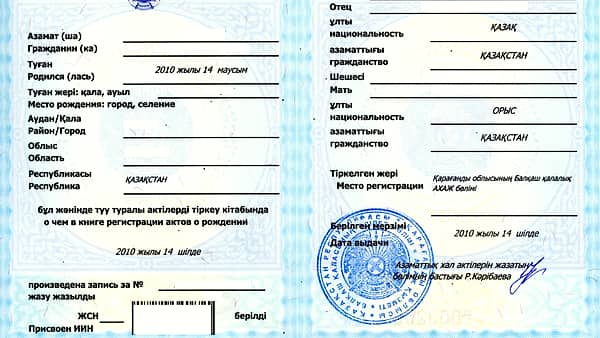
Birth Records and What They Establish
A birth record establishes that a registration was made and what it stated. Contemporaneous entries made by an informant with direct knowledge are close to conclusive. Late registrations, entries based on somebody else's later account, and systems that recorded limited information all support less, and the differences matter when parentage is questioned.

Photographs and Correspondence as Evidence
Photographs show that people were together on particular occasions and correspondence shows that they communicated. Neither establishes the nature of a relationship, and both exist in volumes that make selection visible. Their real value is showing continuity across a period, with dates and context, rather than proving any individual fact.

Affidavits From People Who Knew Them
A useful declaration identifies the writer, explains how they came to know the people involved, and describes specific things they observed with dates and places. Statements that assert conclusions, omit the basis of knowledge, or arrive in identical wording from several people are discounted heavily and can damage a file rather than support it.