Proving a Relationship on Paper
A relationship that everybody involved regards as obvious still has to be established through documents, and the documents were created by systems that recorded what they were designed to record rather than what a proceeding now needs.

The rule in short
Establishing a relationship generally combines civil registry records, evidence of a life shared over time and statements from people who observed it. Registry records are the strongest and are frequently incomplete or unavailable. Shared life evidence fills gaps and is easy to assemble badly. Most cases that fail did so because they relied on one route alone.
What has to be shown is not that two people care about each other but that a defined legal relationship exists or existed. Those are different questions, and the evidence answering the second is more clerical than anybody expects.
The three routes
Civil registry records. Birth, marriage, adoption and death entries made by an official system, which are the primary evidence and the first thing anybody asks for.
Evidence of a shared life. Documents generated by living together or maintaining a connection over time, which corroborate a relationship rather than recording it directly.
Statements from people who observed it. Accounts from relatives, neighbors and others positioned to know, which fill gaps that no document reaches.
Most cases use all three. Registry records establish the formal position, shared life evidence shows it was real, and statements explain what the documents cannot.
The weighting differs by relationship. A parent and child are usually established on registry records alone, while a spousal relationship frequently needs the other two.
Consistency across them decides. A file whose documents, statements and dates agree is far stronger than one containing an impressive item and three that contradict it.
Registry records and their limits
They record a registration, not a fact. An entry establishes that somebody reported something to an authority, which is close to conclusive and not identical to the underlying event.
Late registration weakens them. An entry created years after the event rests on somebody's later account, and its evidential value differs from a contemporaneous one, per birth records and what they establish.
Systems differ enormously. What a registry records, how it is indexed and whether it can be searched varies by country and by period within a country.
Names and spellings cause most problems. Transliteration, patronymics and changed spellings produce apparent mismatches that need explaining rather than ignoring.
Some records were never made. Registration was not universal in many places and periods, which is a documentary problem rather than a doubt about the relationship.
Foreign records need authentication. A record issued abroad usually requires certification before it can be relied on, covered in a document issued abroad and what it needs.
| Route | Establishes | Typical weakness |
|---|---|---|
| Registry record | The formal relationship | Missing, late or misspelled |
| Shared address documents | A life lived together | Gaps in the period |
| Financial connection | Interdependence | Explained other ways |
| Observer statements | What people saw | Drafted alike, no detail |
| Photographs | Association | Proves little alone |
Evidence of a shared life
Documents showing the same address. Tenancy agreements, utility accounts, insurance and correspondence over a period, which are the backbone of this category.
Financial connection. Joint accounts, shared liabilities and transfers between the parties, discussed in joint finances as proof of a relationship.
Designations made for other purposes. Naming somebody as a beneficiary, an emergency contact or a next of kin is a decision made without any proceeding in view.
Photographs and correspondence. Useful as texture and weak as proof on their own, since neither establishes the nature of a relationship reliably.
Continuity beats volume. Ten documents spread across five years establish more than fifty from a single month, because the pattern is what is being shown.
Contemporaneous is what matters. Material created at the time and for an ordinary purpose is what carries this category, and material assembled afterwards does not.
Files fail far more often for having nothing covering a two-year gap than for having too little in total. A modest document from each year of a relationship establishes the pattern; two hundred items from one busy month establish that a month was busy.
Statements from people who observed it
Detail is what makes them work. A statement describing specific occasions, dates and observations is evidence; one asserting that a relationship is genuine is an opinion.
The relationship to the parties matters. Family members are expected and discounted slightly, while unconnected observers carry more weight for that reason.
Say how the writer knows. The basis of knowledge is the first thing a reader looks for, and a statement that omits it is easy to set aside.
Identical statements defeat themselves. Several declarations in the same words signal that somebody drafted them, and the whole group loses value together.
They fill documentary gaps. Where records are unavailable, statements become the principal route, addressed in affidavits from people who knew them.
Formalities vary. Whether a statement needs swearing, witnessing or a particular form of declaration depends on the forum, and defects of that kind are easily avoided.
Assembling the file
Start with what the rule requires. Different relationships require different proof, and gathering material before reading the requirement produces impressive irrelevance.
Get the registry records first. They are primary, they take time to obtain from abroad, and everything else is assembled to support or supplement them.
Explain every discrepancy. Different spellings, differing dates and gaps in the sequence should be addressed where they appear rather than left to be found.
Cover the whole period. A file dense at the beginning and empty for the last three years invites a question about what changed.
Index the material. A short schedule saying what each document establishes makes a file usable and signals that somebody thought about it.
Do not overfill it. Hundreds of photographs and message screenshots add bulk without adding weight, and they bury the handful of documents that actually matter.
Proving a relationship is a documentary exercise about a human one, and the mismatch between those two things accounts for most of the frustration involved in it.
Registry records carry the formal position and fail in predictable ways: late registration, absent systems, and names recorded differently at different times. Each of those is explicable, and none of them explains itself.
Shared life evidence supports rather than establishes, and its value comes from continuity. A thin, even spread across the whole period is worth considerably more than a dense collection from one part of it.
Statements from observers do work no document can, provided they contain specific observations and say how the writer knows. Statements drafted for people to sign are visible immediately and damage the whole group.
Family-based immigration filings are where this evidence gets tested most systematically, and where a gap in the sequence produces a request for further evidence rather than a refusal. Where a case depends on establishing a family relationship, attorneys who handle family petitions know which records the deciding office expects and in what order.
For anybody assembling such a file, the sequence is to read the requirement, obtain the registry records early, fill the periods rather than the pages, explain every discrepancy, and index what is there. Where no civil record was ever made, the evidential route changes entirely, and it is described in proving a Relationship Where Records Never Existed.
Points to carry away
- Registry records are primary and often incomplete.
- Shared life evidence supports but rarely establishes on its own.
- Statements from observers work best when they contain detail.
- Different relationships need different combinations of proof.
- Consistency across the whole file matters more than any single item.
Questions readers ask
What is the strongest evidence of a family relationship?
A contemporaneous civil registry record, meaning a birth, marriage or adoption entry made at or near the time of the event by an official system. Everything else in a file is supporting material by comparison. Where such a record exists, is properly certified and matches the names and dates used elsewhere, the relationship is usually not seriously in issue. The difficulties arise where the record was created years afterwards, where no registration system operated, or where names appear differently across documents.
How much shared life evidence is enough?
Enough to cover the whole period without long gaps, which usually means fewer documents than people assume and spread more evenly. A handful of items from each year, showing a shared address, some financial connection and designations made for ordinary purposes, establishes a pattern. Large volumes of photographs and messages from a short period add length without adding much, and they make the documents that actually matter harder to find in the file.
Do statements from family members carry any weight?
Yes, with a discount, and the discount is smaller than people expect where the statement contains real detail. What matters is whether the writer explains how they know what they are describing and whether they set out specific observations rather than conclusions. A relative describing particular occasions across a period is useful evidence. Several relatives submitting near-identical declarations that a relationship is genuine is visibly drafted material and tends to weaken the file rather than strengthen it.
Sources
- U.S. Department of State — Reciprocity and Civil Documents by Countrytravel.state.gov
- USCIS Policy Manual — Evidenceuscis.gov
- 8 CFR 204.2 — Petitions for Relativesecfr.gov
- Federal Rules of Evidence — Rule 803(9), Public Records of Vital Statisticslaw.cornell.edu
- Federal Rules of Evidence — Rule 902, Evidence That Is Self-Authenticatinglaw.cornell.edu
- Hague Conference — Apostille Sectionhcch.net
True Justice Record is a publication, not a law firm. This article states general rules and cites its sources; it is not advice about any particular case, and the law differs by state and changes over time.
More in Proving a Relationship
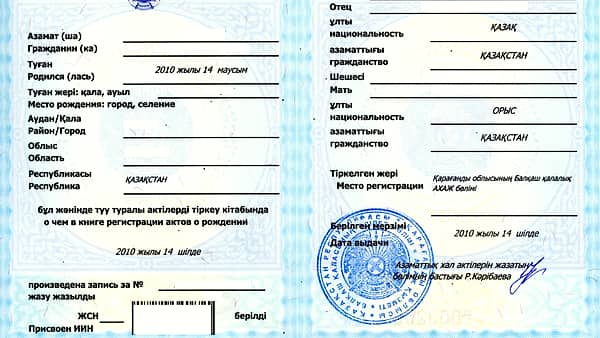
Birth Records and What They Establish
A birth record establishes that a registration was made and what it stated. Contemporaneous entries made by an informant with direct knowledge are close to conclusive. Late registrations, entries based on somebody else's later account, and systems that recorded limited information all support less, and the differences matter when parentage is questioned.
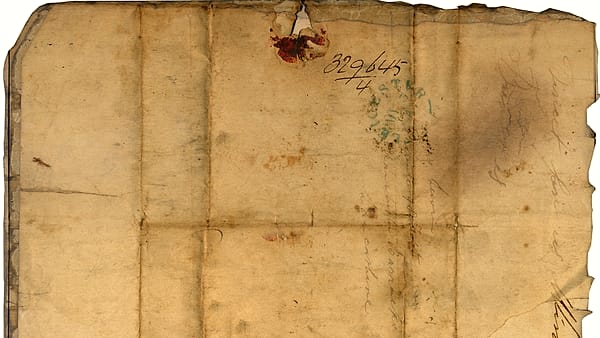
Photographs and Correspondence as Evidence
Photographs show that people were together on particular occasions and correspondence shows that they communicated. Neither establishes the nature of a relationship, and both exist in volumes that make selection visible. Their real value is showing continuity across a period, with dates and context, rather than proving any individual fact.

Affidavits From People Who Knew Them
A useful declaration identifies the writer, explains how they came to know the people involved, and describes specific things they observed with dates and places. Statements that assert conclusions, omit the basis of knowledge, or arrive in identical wording from several people are discounted heavily and can damage a file rather than support it.