Proving a Relationship Where Records Never Existed
Whole regions have no usable civil registers, for reasons ranging from conflict to a system that never operated in rural areas. The relationship is not in doubt; the documents are absent, and the evidential route is different.

The rule in short
Where no civil record exists, a relationship is established through a formal statement of unavailability, secondary documents created for other purposes, and detailed statements from people with direct knowledge. What carries such a file is consistency: several independent sources recording the same names, dates and places, assembled so that a reader can see them agreeing.
A missing record is a documentary problem rather than a doubt about a family. What changes is the route: instead of one authoritative entry, a file is built from several ordinary documents that happen to agree with each other.
Establishing that the record does not exist
Ask the authority formally. A request to the relevant registry, even where the answer is obviously going to be negative, produces the document that starts the file.
A certificate of non-availability. Many authorities issue a formal statement that no record exists, which converts an absence into evidence rather than a gap.
Published guidance may cover it. Some countries are documented as unable to issue particular records, and that published position can be cited directly.
Explain why it does not exist. Conflict, destruction, a system that never reached the area, or registration that was never compulsory are all ordinary and specific reasons.
Evidence the attempt. Correspondence with the authority, receipts and responses show diligence, which matters to how the rest of the file is read.
Do not skip this step. A file offering secondary material without first establishing that the primary record is unavailable answers a question nobody asked, per secondary evidence and its rules.
Secondary documents that carry weight
Religious registers. Baptismal, marriage and burial records frequently predate civil registration and were kept carefully by institutions with their own reasons.
School and university records. Enrollment documents naming parents and recording dates of birth were created for administrative purposes years before any dispute.
Medical and hospital records. Admission and treatment records naming family members and addresses establish relationships incidentally and reliably.
Employment and pension files. Records naming dependants, next of kin and beneficiaries were compiled by employers who had no interest in the question.
Census and household registers. Where they exist, they record households at a point in time, which is exactly what is being established.
Identity and travel documents. Passports, identity cards and residence permits frequently record parentage and were issued after some form of check.
Property and inheritance records. Documents dividing an estate or transferring land routinely name family members and set out their relationships to one another.
Military and civil service files. Where either existed, service records commonly recorded dependants and next of kin in some detail and were retained for long periods.
| Source | Typically records | Why it helps |
|---|---|---|
| Religious register | Births, marriages, deaths | Kept independently, often older |
| School records | Parents, date of birth | Administrative, contemporaneous |
| Hospital records | Family, address | Created for treatment |
| Employment file | Dependants, next of kin | Compiled by a third party |
| Census entry | The household | A snapshot of who lived together |
Statements from people with knowledge
Detail is what makes them work. Specific occasions, dates and observations carry weight, and general assertions about a family do not, per affidavits from people who knew them.
Older relatives and community members. People who were present at births, marriages and family events are the closest available substitute for a register.
Say how the writer knows. The basis of knowledge is even more important where no document corroborates the account, because it is all a reader has.
Independent writers matter more. Statements from outside the family carry additional weight precisely because the family's own account is what is being tested.
Avoid uniformity. Several statements in identical words undo the independence that gave them value, and the whole group falls together.
Formalities still apply. Swearing, declaration wording and translation requirements are the same here as anywhere else, and they are easily satisfied once identified.
Age of the writer is a factor. Statements from people who were adults at the time carry more than accounts passed down, and the distinction should be made explicit in the text.
No single substitute document establishes a relationship the way a civil register does. What establishes it is four or five independent documents, created for unrelated reasons, recording the same names and dates. The file should be arranged so that agreement is visible on the first page.
Consistency as the organizing principle
Several sources agreeing is the argument. Independent documents recording the same names, dates and places establish a relationship that no single substitute could.
Independence is what counts. Three documents derived from one earlier account are one source, and tracing each back to its origin is worth doing.
Explain the differences. Spellings and dates will vary across old documents, and an explanation of why is more convincing than pretending they match.
Build a chronology. A dated list showing which document establishes which fact makes the agreement visible instead of leaving it to be reconstructed.
Names need particular care. Transliteration and naming conventions produce apparent conflicts, addressed in names spelled differently abroad.
Do not overreach. Claiming that the material establishes more than it does invites scrutiny of the whole file, and the modest claim is usually sufficient.
Presenting the file
Lead with the unavailability. The reader should know at the outset why no primary record appears, before they start wondering about it.
Index by proposition. Organizing material by what it establishes, rather than by type, tells a reader what each document is doing there.
Translate everything completely. Old documents carry stamps and annotations that matter, and partial translation loses exactly the parts that corroborate.
Authenticate where possible. Some secondary documents can be certified or legalized, and doing so removes a question that would otherwise arise.
Keep the claim proportionate. The file establishes a relationship on the available material, and presenting it as conclusive invites an argument it does not need.
Say what has already been tried. A short account of the searches made and the authorities approached shows a reader that the secondary route was reached rather than chosen.
Consider whether testing helps. Where the relationship is biological and genuinely doubted, testing may resolve it, per DNA testing and its place.
Missing records are a documentary problem and not a doubt about a family, and the evidential route simply changes from one authoritative entry to several ordinary ones.
The first step is establishing the absence formally, through a request to the registry and a statement of unavailability where one can be obtained. A file that skips it answers a question nobody asked.
Secondary documents work because they were created for their own purposes. School enrollments, hospital admissions, employment files and religious registers all record relationships incidentally, which is exactly why they persuade.
Consistency across independent sources is what carries these files. Several documents from unconnected origins recording the same names, dates and places establish more than any single substitute ever could.
For presentation, lead with the unavailability, index the material by what each item establishes, translate everything completely, explain the variations in names and dates, and keep the claim proportionate to the evidence.
Points to carry away
- A formal statement of unavailability is the usual first step.
- Secondary documents were created for other purposes and are stronger for it.
- Consistency across independent sources is what carries the file.
- Statements need detail and a stated basis of knowledge.
- The standard does not drop because the records are missing.
Questions readers ask
What is the first step when no civil record exists?
Asking the relevant authority anyway, and obtaining a formal statement that no record is available. Many registries issue such a certificate, and where they do it converts an absence into a piece of evidence rather than a gap in the file. Where the country is documented as unable to issue a particular record, that published position can be relied on directly. Either way, correspondence showing the attempt was made matters, because it establishes diligence and affects how everything else in the file is read.
Which secondary documents are most useful?
Those created by institutions for their own administrative reasons, years before anybody needed to prove anything. Religious registers, school enrollment records, hospital admissions, employment and pension files naming dependants, census entries and identity documents recording parentage all fall into this category. Their strength comes from being incidental: nobody made those records to establish a relationship, and that is precisely why a reader finds them persuasive when several of them independently record the same information.
Does the standard of proof drop when records are unavailable?
No. The obligation to establish the relationship remains, and it remains at whatever level applies to the proceeding. What changes is the route by which it is satisfied. Frameworks provide for establishing facts by secondary means where primary records genuinely cannot be obtained, and the party relying on that route generally has to prove the unavailability first. The file then succeeds or fails on whether several independent sources agree, and on whether the statements accompanying them contain real detail.
Sources
- Federal Rules of Evidence — Rule 1004, Admissibility of Other Evidence of Contentlaw.cornell.edu
- Federal Rules of Evidence — Rule 803(10), Absence of a Public Recordlaw.cornell.edu
- U.S. Department of State — Reciprocity and Civil Documents by Countrytravel.state.gov
- USCIS Policy Manual — Evidenceuscis.gov
- Federal Rules of Evidence — Rule 803(11), Records of Religious Organizationslaw.cornell.edu
- Federal Rules of Evidence — Rule 803(13), Family Recordslaw.cornell.edu
True Justice Record is a publication, not a law firm. This article states general rules and cites its sources; it is not advice about any particular case, and the law differs by state and changes over time.
More in Proving a Relationship
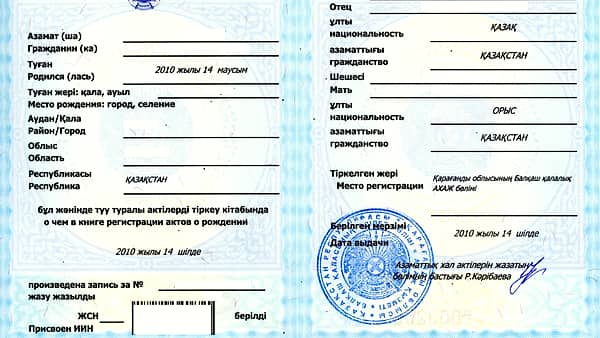
Birth Records and What They Establish
A birth record establishes that a registration was made and what it stated. Contemporaneous entries made by an informant with direct knowledge are close to conclusive. Late registrations, entries based on somebody else's later account, and systems that recorded limited information all support less, and the differences matter when parentage is questioned.
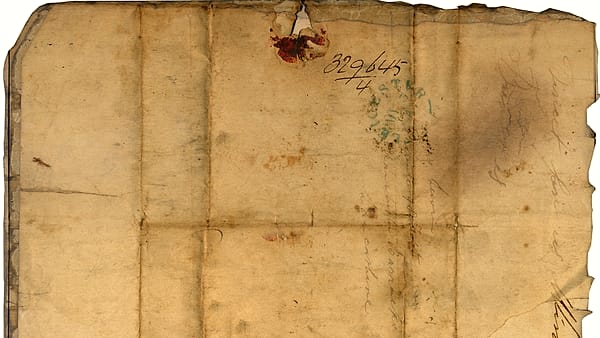
Photographs and Correspondence as Evidence
Photographs show that people were together on particular occasions and correspondence shows that they communicated. Neither establishes the nature of a relationship, and both exist in volumes that make selection visible. Their real value is showing continuity across a period, with dates and context, rather than proving any individual fact.

Affidavits From People Who Knew Them
A useful declaration identifies the writer, explains how they came to know the people involved, and describes specific things they observed with dates and places. Statements that assert conclusions, omit the basis of knowledge, or arrive in identical wording from several people are discounted heavily and can damage a file rather than support it.