Photographs and Correspondence as Evidence
Every relationship file contains photographs and messages, and they are the material a reader spends the least time on. Understanding what they can establish, and what they cannot, changes how many of them belong in a file.
The rule in short
Photographs show that people were together on particular occasions and correspondence shows that they communicated. Neither establishes the nature of a relationship, and both exist in volumes that make selection visible. Their real value is showing continuity across a period, with dates and context, rather than proving any individual fact.
These are the items people gather first and the items a reader weighs least. That is not because they are worthless but because they answer a question nobody is asking: whether two people were ever in the same place.
What photographs establish
Presence together at a moment. A photograph shows that the people in it were in one place at one time, which is a narrow fact and occasionally a useful one.
Nothing about the relationship. The nature of a connection between the people in an image is inferred by the viewer rather than shown by the photograph.
Setting and company can matter. Images at family gatherings, in a shared home or with other relatives establish more context than a series of portraits.
Dates are usually assertions. A caption stating when a photograph was taken is a statement by whoever wrote it unless something independent supports it.
Metadata may support the date. Embedded information can corroborate when an image was created, with the limits described in metadata and what it actually records.
Spread across time is the value. Twenty photographs, one from each period of a relationship, do considerably more than two hundred taken on a single holiday.
Printed copies lose information. An image reprinted or reshared has usually lost whatever creation data the original file carried, which matters if anybody asks.
What correspondence establishes
That communication occurred. Messages, letters and call records show contact between two people, which is the fact they actually establish.
Not the nature of the relationship. What the communication signifies is inferred from its content, and content is exactly what a selective file controls.
Contemporaneous references help. Correspondence mentioning shared plans, household matters or other people is more useful than expressions of feeling.
Letters from third parties are stronger. Correspondence addressed to both people by somebody else establishes something about how others regarded the relationship.
Volume is available and unhelpful. Message archives run to thousands of items, and filing a large extract signals that nobody selected anything.
Call records differ from content. Logs establish that contact happened and are obtainable independently, per call records against call content.
| Item | Establishes | Does not establish |
|---|---|---|
| A photograph | Presence together | The relationship |
| A message thread | Contact | Its nature |
| A letter from a third party | How others saw it | Daily life |
| A screenshot | What a screen showed | The underlying record |
| Photographs across years | Continuity | Any specific fact |
Selection, and how it is read
Any selection is visible. A reader knows that what they are looking at was chosen, and the criteria for choosing become a fair question.
Choose for coverage, not for quality. The purpose is to show that the relationship existed throughout, which favors an even spread over the most attractive items.
Label each item usefully. Date, place and who is present, stated plainly, turns an image into something a reader can place in the sequence.
Avoid burying the file. Two hundred photographs make the twelve documents that matter harder to find, and the documents are what carry the case.
Do not exclude the awkward period. A gap in the sequence is noticed, and an image from a difficult time with an explanation is better than silence.
Keep the originals available. Where authenticity is questioned, the original files with their metadata answer the question and printed copies do not.
The instinct is to include everything, and the effect is to bury the documents that carry the case. A dozen dated images spread evenly across the period, each labeled with place and company, contributes more than a folder that nobody will work through.
When authenticity is questioned
Provenance is the first question. Who took the image, on what device, and how it reached the file is what an authenticity challenge asks about.
Screenshots are weak. A screenshot of a message is a picture of a screen, and the point is developed in screenshots and why they prove little.
Original files carry metadata. Exported originals retain creation information that printed copies and reshared images have usually lost.
Editing is detectable and common. Ordinary phone processing alters images routinely, so evidence of modification is not evidence of fabrication.
Corroborate with independent material. An image supported by a hotel booking or a travel record on the same date is far harder to dispute.
Generated images are now a live concern. The possibility of synthetic material has made provenance more important than it once was, particularly for images with no independent support behind them.
Challenges are rare in practice. Most photographs in most files are never questioned, and the risk of a challenge is a reason to keep originals rather than to avoid filing images.
Using them well
Treat them as supporting material. They belong in a file alongside documents rather than instead of them, and the documents do the work, per cohabitation and proving a life together.
Aim at continuity. A small number spread evenly across the whole period is the most useful arrangement, and it is rarely what files contain.
Include others in the frame. Images with family, colleagues and friends show a relationship that other people knew about, which is worth more than private ones.
Give correspondence context. A few messages about ordinary shared logistics establish more than a large volume of affectionate exchanges.
Keep it proportionate. A dozen images and a page of correspondence extracts is a reasonable contribution to a file, and fifty pages of the same material is not.
Let the documents lead. This category supports a case built on records, and a file where it appears first has usually not found the documents that would have carried it.
Retain what was not filed. Where a question arises later, having the full set available answers it, and having discarded everything else does not.
Photographs and correspondence are the first material people gather and the material a reader weighs least, because they answer a question about presence and contact rather than about a relationship.
Their value lies in continuity. A modest set spread evenly across the whole period shows that a relationship persisted, which is what a reader is actually assessing when they look at this category at all.
Selection is visible and unavoidable, so it should be made for coverage rather than for the most appealing items, and each item should carry a plain label recording date, place and who is present.
Where authenticity is challenged, provenance decides the question. Original files with their metadata answer it, screenshots and printed copies mostly do not, and independent corroboration on the same date is the strongest response.
The practical rule is proportion. This material supports a file built on documents, and a file where it dominates has usually not found the documents that would have carried the case.
Points to carry away
- Photographs prove presence together, not the relationship.
- Correspondence proves contact, not its nature.
- Spread across a period is what gives either value.
- Metadata and provenance matter if authenticity is questioned.
- Volume works against a file rather than for it.
Questions readers ask
Why do photographs count for so little?
Because they establish a narrow fact. A photograph shows that the people in it were in the same place when it was taken, and everything else about what it appears to show is inference by the viewer. It does not establish a household, a commitment or a shared life, which are the things usually being assessed. Photographs also come from an effectively unlimited supply, so a reader knows that what they are seeing was selected, and any selection invites a question about what was not included.
How many photographs should a file contain?
Fewer than most files have. Somewhere around a dozen, spread evenly across the whole period rather than clustered around holidays and celebrations, with each one labeled to say when and where it was taken and who else is present. The purpose is to show continuity, which a small even spread achieves and a large uneven collection does not. Large volumes also bury the documents that carry the case, which is the opposite of what a file should do.
What happens if the other side questions whether an image is genuine?
The question becomes provenance: who took it, on what device, and how it reached the file. Original image files retain creation information that supports the answer, while printed copies, screenshots and images that have been reshared through messaging services have usually lost it. Independent corroboration is the strongest response, so an image supported by a travel booking or a receipt from the same date and place is far harder to dispute than one standing alone.
Sources
- Federal Rules of Evidence — Rule 901, Authenticating or Identifying Evidencelaw.cornell.edu
- Federal Rules of Evidence — Rule 1001, Definitions That Apply to This Articlelaw.cornell.edu
- Federal Rules of Evidence — Rule 403, Excluding Relevant Evidencelaw.cornell.edu
- Federal Rules of Evidence — Rule 401, Test for Relevant Evidencelaw.cornell.edu
- NIST — Digital Forensics Researchnist.gov
- USCIS Policy Manual — Evidenceuscis.gov
True Justice Record is a publication, not a law firm. This article states general rules and cites its sources; it is not advice about any particular case, and the law differs by state and changes over time.
More in Proving a Relationship
Birth Records and What They Establish
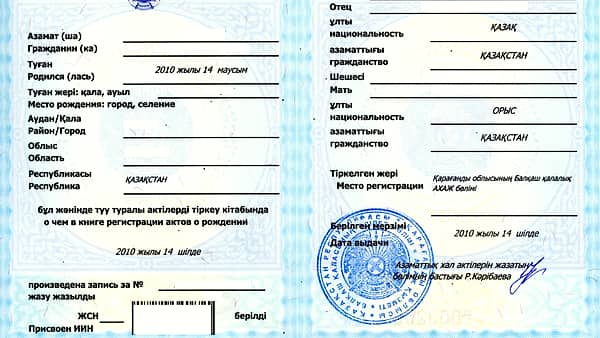
A birth record establishes that a registration was made and what it stated. Contemporaneous entries made by an informant with direct knowledge are close to conclusive. Late registrations, entries based on somebody else's later account, and systems that recorded limited information all support less, and the differences matter when parentage is questioned.
Affidavits From People Who Knew Them
A useful declaration identifies the writer, explains how they came to know the people involved, and describes specific things they observed with dates and places. Statements that assert conclusions, omit the basis of knowledge, or arrive in identical wording from several people are discounted heavily and can damage a file rather than support it.
Joint Finances as Proof of a Relationship
Joint accounts, shared liabilities and mutual designations are among the most persuasive evidence of a relationship, because third parties verified the arrangements for their own reasons. Their weight comes from duration and from actual use rather than from existence. Couples who keep finances separate are common, and the reason for that should appear in the file.