Cohabitation, and Proving a Life Together
Two people sharing a life produce a paper trail without intending to: tenancies, accounts, insurance, correspondence. That incidental quality is exactly what makes the material persuasive, and it is why assembling it afterwards works so poorly.
The rule in short
Evidence of cohabitation is drawn from documents created for ordinary purposes that happen to record two people at the same address over time. Continuity across the whole period matters more than the quantity from any part of it, and material generated for the proceeding carries far less weight than material generated by simply living.
The strength of cohabitation evidence comes from its being accidental. Nobody signs a tenancy or renews an insurance policy in order to prove anything, which is precisely why those documents establish something that a stack of photographs does not.
The strongest material
A tenancy or mortgage in both names. A single document binding both people to the same address, created for a reason unconnected with any proceeding, is the best item in this category.
Joint utility accounts. Services in both names at one address, running across a period, establish the shared residence directly and continuously.
Insurance covering both. Household or vehicle policies naming both people are strong because insurers verify what they are told and charge accordingly.
Official correspondence to the same address. Letters from authorities, banks and employers addressed to each person at one address over time build the pattern.
Joint financial commitments. Shared liabilities and accounts are treated separately and are among the most persuasive material, per joint finances as proof of a relationship.
Both names on one document. A single item naming both people is worth considerably more than two items naming one each, and files rarely reflect that.
Supporting material
Designations for other purposes. Naming a partner as an emergency contact, a beneficiary or a next of kin is a decision recorded by somebody else entirely.
Employment and benefits records. Where an employer or scheme records a partner or a household, that entry was made for administrative reasons and carries weight for that reason.
Medical and school records. Registrations listing a shared address or naming a partner are ordinary documents that happen to establish something useful.
Travel booked together. Reservations and tickets in both names across a period show a shared life, though each one on its own establishes little.
Photographs across the period. Useful for showing continuity over time rather than as proof of any particular fact, discussed in photographs and correspondence as evidence.
Statements from people who visited. Neighbors and friends describing what they observed fill gaps that documents leave, particularly early in a relationship.
| Evidence | Weight | Why |
|---|---|---|
| Tenancy in both names | High | One document, both people, verified |
| Joint utility account | High | Continuous and incidental |
| Insurance naming both | High | Verified by a third party |
| Separate letters, one address | Moderate | Two documents, not one |
| Photographs and messages | Low | Contact, not household |
Continuity and the shape of the file
Cover every year. A file with material from each year of the period tells a coherent story, and one that stops for two years invites the obvious question.
Even spread beats density. Three documents per year across five years establish more than sixty documents from a single busy month.
Order it chronologically. A reader assessing continuity needs to see the sequence, and material grouped by type conceals exactly what is being assessed.
Include a short schedule. A one-page list showing what covers which period lets a reader verify the continuity without reconstructing it themselves.
Explain periods apart. Work, study, illness and immigration restrictions separate couples routinely, and an unexplained separation reads worse than an explained one.
Do not pad the recent months. Files heavy on the last few weeks and thin before them look exactly like what they are, which is material assembled when the requirement appeared.
Date every item. A document without a visible date does nothing for continuity, and a reader cannot place it in the sequence they are trying to assess.
The most common weakness in these files is that everything names one person or the other. A tenancy, an insurance policy or a utility account naming both people together is worth more than a dozen items naming each separately, and files rarely contain more than two or three of them.
What carries less weight than expected
Messages and call logs. They establish contact rather than a shared life, and they exist in volumes that make selection obviously selective.
Photographs alone. They show people together on particular occasions and do not show a household, which is what is usually being asked about.
Statements without detail. A declaration asserting that two people live together, without describing what the writer observed, adds very little.
Documents addressed to one person. Separate letters to each partner at one address help, and they are weaker than a single document naming both.
Anything created for the filing. A letter obtained specifically to support a case reads differently from a document that existed already, and readers notice.
Recent additions to old accounts. Adding a partner to a long-standing account last month establishes last month, not the years before it.
Difficult situations
Living in somebody else's home. Where a couple stays with family, no tenancy exists, and the answer is correspondence, designations and statements from the household.
Informal rental arrangements. Where rent is paid in cash without documents, the difficulty is the general one described in cash and why it is hard to prove.
Periods living apart. Explained separations are normal, and the explanation should appear in the file with whatever documents support it.
One partner abroad. Long-distance periods need different evidence: travel records, communication, financial support and visits, presented as continuity of the relationship.
Privacy and shared households. Some couples deliberately keep finances separate, which is unremarkable and needs saying rather than leaving a reader to wonder.
Early relationships. A short history cannot show years of continuity, and a file in that position should be built on depth within the available period rather than pretending to a longer one.
Cohabitation evidence works because it was not created to be evidence. Tenancies, accounts and policies exist for their own reasons, and that incidental quality is what makes them difficult to dismiss.
Continuity across the whole period is what a reader is assessing. An even spread of modest documents across every year establishes more than a dense collection from whichever months happened to generate paper.
A single document naming both people is worth several naming one each, and most files are short of them. Tenancies, joint accounts and insurance policies are where those documents come from.
The material people expect to rely on, photographs and messages, carries less than they think. It shows contact and occasions rather than a household, and it exists in quantities that make any selection look selective.
These files are read closely in marriage-based cases, and the questions asked at interview generally track the gaps in the documentary record rather than the documents themselves. Where a case depends on showing a shared life, a marriage green card lawyer can say what a file needs before it is filed.
Where the ordinary documents do not exist, because a couple lived with family or paid rent informally, the answer is designations, correspondence and detailed statements from people who were actually there.
Points to carry away
- Documents created for other purposes carry the most weight.
- Continuity across the period beats volume from part of it.
- Both names on the same document is stronger than two documents.
- Gaps need explaining rather than hiding.
- Material assembled afterwards is visibly assembled.
Questions readers ask
What is the single most useful document for proving cohabitation?
A tenancy agreement or mortgage naming both people at the same address, running across a period. It is one document rather than two, it names both parties together, it was created by a third party for a commercial reason, and it covers time rather than a moment. Joint utility accounts and insurance policies naming both people do much the same work. Most files are short of documents in this category and heavy on material that names one person or the other separately.
Do photographs and messages help?
They help at the margin and carry much less weight than people expect. Photographs show that two people were together on particular occasions, which is not the same as showing a shared household, and messages establish contact rather than a life lived together. Both also exist in volumes large enough that any selection is obviously a selection. They are worth including as texture across the period, and a file that relies on them because the ordinary documents are missing is in a weak position.
What should be done about a period when the couple lived apart?
Explain it, with whatever documents support the explanation. Work postings, study, family illness and immigration restrictions separate couples routinely, and a reader who sees an unexplained gap will fill it with their own assumption. The explanation should appear in the file where the gap appears, accompanied by evidence of the relationship continuing through that period: travel records, communication, financial support and visits. An explained separation is unremarkable; an unexplained one is the first thing anybody asks about.
Sources
- USCIS Policy Manual — Evidenceuscis.gov
- 8 CFR 204.2 — Petitions for Relativesecfr.gov
- USCIS Policy Manual — Family-Based Petitionsuscis.gov
- Federal Rules of Evidence — Rule 803(6), Records of a Regularly Conducted Activitylaw.cornell.edu
- Federal Rules of Evidence — Rule 901, Authenticating or Identifying Evidencelaw.cornell.edu
- Federal Rules of Evidence — Rule 401, Test for Relevant Evidencelaw.cornell.edu
True Justice Record is a publication, not a law firm. This article states general rules and cites its sources; it is not advice about any particular case, and the law differs by state and changes over time.
More in Proving a Relationship
Birth Records and What They Establish
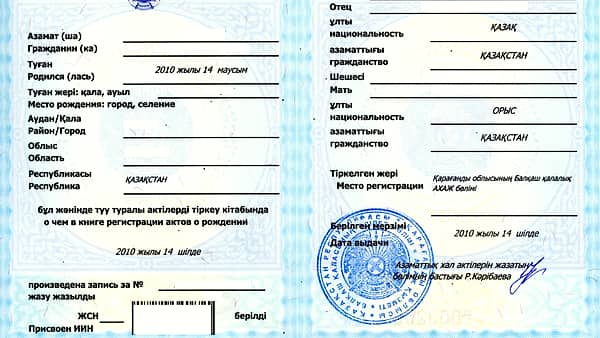
A birth record establishes that a registration was made and what it stated. Contemporaneous entries made by an informant with direct knowledge are close to conclusive. Late registrations, entries based on somebody else's later account, and systems that recorded limited information all support less, and the differences matter when parentage is questioned.
Photographs and Correspondence as Evidence
Photographs show that people were together on particular occasions and correspondence shows that they communicated. Neither establishes the nature of a relationship, and both exist in volumes that make selection visible. Their real value is showing continuity across a period, with dates and context, rather than proving any individual fact.
Affidavits From People Who Knew Them
A useful declaration identifies the writer, explains how they came to know the people involved, and describes specific things they observed with dates and places. Statements that assert conclusions, omit the basis of knowledge, or arrive in identical wording from several people are discounted heavily and can damage a file rather than support it.