Marriage Records and Their Gaps
The certificate answers one question and files usually need three answered. Whether the marriage was validly contracted, whether either party was free to marry, and whether the marriage still subsists are all outside what the document records.
The rule in short
A marriage record establishes that a ceremony took place and was registered. It does not establish that the marriage was valid under the governing law, that earlier marriages had properly ended, or that the marriage continues. Customary and religious ceremonies raise a further question about whether registration occurred at all, and unregistered unions need a different evidential approach.
Files arrive containing a marriage certificate and nothing else, on the assumption that it settles the matter. It settles that a ceremony was registered, which is one of the several things that usually need establishing.
What the certificate shows
A ceremony occurred and was registered. The document records that an authority entered a marriage in its register, together with the particulars supplied to it.
The particulars of the parties. Names, ages and frequently the previous marital status of each party, which is a field worth reading carefully.
Where and when. The place of celebration determines which law governs validity, and the date fixes the point from which everything else is measured.
Who officiated. Whether the person conducting the ceremony was authorized to do so is occasionally the whole question about validity.
Witnesses, in some systems. Their presence is a formality in some jurisdictions and a validity requirement in others, and the difference matters.
Annotations about later events. Some registries note dissolution or annulment on the original entry, and some do not, which is why an absence proves nothing.
What it does not show
That the marriage was valid. Registration and validity are different questions, and a registered ceremony that failed a formal requirement may not have created a marriage.
That either party was free to marry. Registrars rarely verify that an earlier marriage ended, and the declaration on the form is a statement by the parties.
That the marriage continues. A certificate is a record of an event, and nothing about a copy issued today indicates that the marriage subsists.
That the parties live together. Formal status and a shared life are separate questions, and the second is proved by the material described in cohabitation and proving a life together.
That the marriage is recognized elsewhere. Recognition in another country is governed by that country's rules, and a valid marriage is not automatically recognized everywhere.
That the details are correct. The register contains what was reported to it, and errors in names and dates are common and correctable.
| Question | Answered by the certificate | Proved by |
|---|---|---|
| Did a ceremony occur | Yes | The certificate |
| Was it valid | No | Law of the place |
| Were both free to marry | No | Prior dissolution records |
| Does it subsist | No | Current search or declaration |
| Is it recognized here | No | Recognition rules |
Validity questions
Governed by the place of celebration. Most systems assess whether a marriage was validly contracted by the law where the ceremony took place rather than where the parties now are.
Capacity is assessed differently. Age, prohibited relationships and existing marriages may be governed by the law of each party's domicile rather than the place of ceremony.
Formalities matter. Notice periods, authorized officiants, required witnesses and registration deadlines are all capable of affecting validity in some systems.
Proxy and remote ceremonies. Marriages where one or both parties were absent raise recognition questions that vary considerably between jurisdictions.
Consular and military ceremonies. Marriages conducted by consular officials or under military authority follow their own rules and are recognized unevenly.
An expert may be needed. Where the governing law is foreign and contested, evidence about it is an expert question rather than an argument.
Files routinely answer only the first. The certificate shows a ceremony was registered; the dissolution records for both parties show they were free to marry; and evidence about the governing law shows the ceremony created a marriage. Assembling all three at the outset is faster than supplying them one request at a time.
Earlier marriages and their endings
Each prior marriage needs an ending. A divorce decree, annulment or death certificate for every earlier marriage of both parties is a standard requirement.
Foreign divorces raise recognition issues. Whether a divorce obtained abroad is recognized is a separate question, addressed in divorce records from another country.
The sequence matters. A marriage contracted before an earlier one ended may be void, and the dates on the documents are what establishes the order.
Religious dissolution may not suffice. A divorce recognized by a religious authority is not necessarily a civil dissolution, and both may be required.
Declared status on the certificate. Where a party declared themselves single and was not, the declaration is a problem separate from the validity question.
Missing decrees are common. Where a decree cannot be obtained, secondary evidence of the dissolution follows the ordinary route for unavailable records.
Unregistered and customary unions
Many ceremonies are never registered. Customary and religious marriages in some countries create a valid union without any civil entry ever being made.
Recognition depends on local law. Whether the ceremony created a marriage is a question about the law of the place, and evidence about that law is usually needed.
Evidence of the ceremony itself. Photographs, statements from those present, religious registers and community records substitute for the civil entry.
Late civil registration is sometimes possible. Some systems permit registration years afterwards, which produces a document with the weight of a late entry.
Informal unions are different again. A relationship treated as a marriage by a community without any ceremony raises questions no certificate can answer.
Evidence of the life lived is essential. Where no document records the union, the shared life material carries the case, per joint finances as proof of a relationship.
A marriage certificate answers whether a ceremony was registered, which is one question among the several a file usually has to address.
Validity is governed by the law of the place of celebration and is a separate question from registration. Formalities, capacity and the authority of the officiant all bear on it, and none of them appears on the document.
Earlier marriages have to be shown to have ended, for both parties, with the dates establishing the sequence. Missing decrees and foreign divorces whose recognition is uncertain are the most frequent problems.
Customary and religious unions that were never registered are common and are not defective for that reason. What they need is evidence about the local law, evidence of the ceremony, and evidence of the life that followed.
Marriage-based filings turn on all three questions rather than on the certificate alone, and a missing decree from an earlier marriage is one of the commonest reasons a case stalls. Where a filing depends on a marriage, how a marriage-based green card is processed can explain how a marriage-based green card is processed and what the record needs to contain.
For a file, the useful approach is to treat the certificate as the first document rather than the complete answer, and to assemble the dissolution records, the validity material and the shared life evidence alongside it. Where the question is not the paperwork but the intention behind the ceremony, a Marriage Questioned as Not Genuine sets out what is actually assessed.
Points to carry away
- The certificate records a ceremony and its registration.
- Validity is governed by the law of the place of celebration.
- Ending an earlier marriage must be proved separately.
- Customary and religious ceremonies may never be registered.
- A current certificate does not show the marriage subsists.
Questions readers ask
Does a marriage certificate prove the marriage was valid?
No. It establishes that a ceremony took place and was entered in a register, which is a record of an event rather than a determination about its legal effect. Validity is assessed under the law of the place where the ceremony was celebrated, and a registered marriage can still fail a formal requirement such as an authorized officiant, a required notice period or the presence of witnesses. Capacity questions, including age and whether an earlier marriage had ended, are frequently governed by different law again.
Why are documents about earlier marriages always requested?
Because a registrar generally does not verify that a previous marriage ended before conducting a ceremony. The declaration on the marriage form is a statement by the parties rather than a finding, so the ending of every earlier marriage of both parties has to be proved separately by a divorce decree, annulment or death certificate. The dates matter as much as the documents: a marriage contracted before an earlier one was dissolved may be void, and the sequence is established by the paperwork.
What if the marriage was a customary or religious ceremony that was never registered?
That is common in many countries and is not by itself a defect. Whether the ceremony created a valid marriage is a question about the law of the place where it happened, and evidence about that law is usually required. Alongside it, the ceremony itself is evidenced through photographs, religious registers, community records and statements from people who attended. Because no civil document records the union, evidence of the shared life that followed carries proportionately more weight in the file.
Sources
- U.S. Department of State — Reciprocity and Civil Documents by Countrytravel.state.gov
- USCIS Policy Manual — Evidenceuscis.gov
- 8 CFR 204.2 — Petitions for Relativesecfr.gov
- Federal Rules of Evidence — Rule 803(9), Public Records of Vital Statisticslaw.cornell.edu
- Federal Rules of Civil Procedure — Rule 44.1, Determining Foreign Lawlaw.cornell.edu
- Hague Conference — Apostille Sectionhcch.net
True Justice Record is a publication, not a law firm. This article states general rules and cites its sources; it is not advice about any particular case, and the law differs by state and changes over time.
More in Proving a Relationship
Birth Records and What They Establish
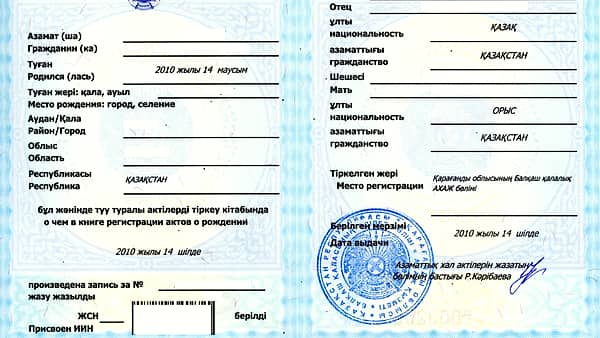
A birth record establishes that a registration was made and what it stated. Contemporaneous entries made by an informant with direct knowledge are close to conclusive. Late registrations, entries based on somebody else's later account, and systems that recorded limited information all support less, and the differences matter when parentage is questioned.
Photographs and Correspondence as Evidence
Photographs show that people were together on particular occasions and correspondence shows that they communicated. Neither establishes the nature of a relationship, and both exist in volumes that make selection visible. Their real value is showing continuity across a period, with dates and context, rather than proving any individual fact.
Affidavits From People Who Knew Them
A useful declaration identifies the writer, explains how they came to know the people involved, and describes specific things they observed with dates and places. Statements that assert conclusions, omit the basis of knowledge, or arrive in identical wording from several people are discounted heavily and can damage a file rather than support it.