A request for additional time to obtain evidence succeeds when it identifies the specific material sought, explains what steps have already been taken, states why the delay was unavoidable and proposes a realistic date. Requests that are general, late or repeated without progress are refused, and the refusal is frequently harder to recover from than the original gap.
An exhibit needs three things: an identifier that appears on the exhibit itself, a reference in the document it supports, and a physical or electronic association strong enough to survive handling. Where any of those is missing, the attachment stops being evidence of anything in particular and becomes a page somebody has to argue about instead.
A customer can obtain their own account records quickly and cheaply. Anybody else generally needs the customer's authorization, a subpoena served with notice to the customer, or a court order. The notice regime exists to give the customer an opportunity to object, and skipping it is the most common reason a bank declines to produce anything at all.
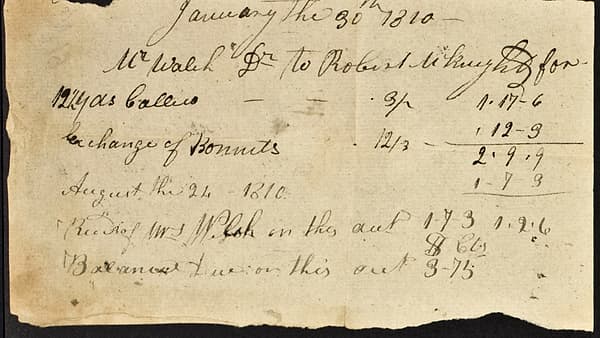
Bank statements are persuasive because an institution produced them and because they are internally checkable. Their weakness is that they are supplied selectively. Missing pages, accounts that appear once and vanish, balances that do not carry forward and unexplained large movements are the features a reader notices before anything else in the file.
Beyond a reasonable doubt requires that no reasonable doubt about the proposition remains after considering the evidence. It applies to criminal liability and very little else. Because it is the standard the public knows, parties frequently assume it governs proceedings that in fact use a balance of probabilities, and misjudge both what they must prove and what an opponent must overcome.
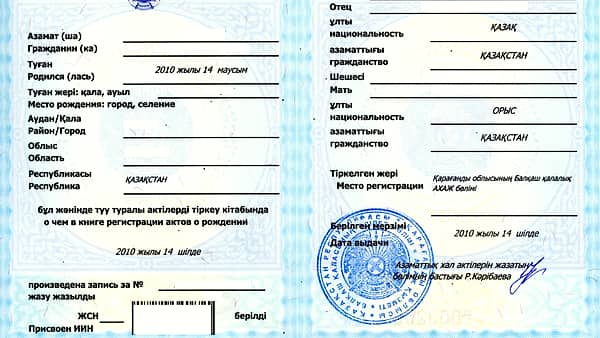
A birth record establishes that a registration was made and what it stated. Contemporaneous entries made by an informant with direct knowledge are close to conclusive. Late registrations, entries based on somebody else's later account, and systems that recorded limited information all support less, and the differences matter when parentage is questioned.
Business income is evidenced by accounts, tax filings, bank activity and corporate records, each showing something different. Declared profit reflects how expenses were treated, drawings differ from profit, and a company's position differs from its owner's. Reading them together, and explaining the differences, is what makes a self-employment file credible.
A record is admissible where it was made at or near the time by somebody with knowledge, kept in the course of a regularly conducted activity, and where making it was a regular practice. The reliability comes from routine: an entry made the same way every day, by somebody whose job depends on accuracy, is trustworthy in a way an occasional note is not.
Carrier records establish that a call or message occurred, when, for how long, between which numbers and from roughly where. They almost never contain content, which is generally not retained at all. That limitation matters less than it appears, because pattern, timing and frequency answer many questions that a transcript would not.
Cash defeats the ordinary financial evidence because no third party records the transaction. What remains provable is that money was withdrawn, that a corresponding sum was deposited elsewhere, that circumstances changed consistently with the payment, and whatever contemporaneous notes or receipts the parties made. Building those into a coherent account is the only available route.
A certified copy carries a statement by the officer who holds the original that the copy matches the record. Its value comes entirely from that custody. A notarized copy is a different thing: the notary attests that a copy was made in their presence, which addresses tampering but says nothing about any register. Knowing which one a proceeding wants avoids a wasted trip.
A certified translation carries a signed statement identifying the translator, asserting their competence in both languages, and confirming that the translation is complete and accurate. Most receiving bodies require nothing more, and no accreditation exists in many jurisdictions. What certification never does is say anything about whether the original document is genuine.