When the Holder of a Record Refuses
A letter declining to produce records feels final and almost never is. Refusals come in a handful of recognizable varieties, each with its own answer, and the great majority of them are resolved without anybody going anywhere near a court.

The rule in short
Refusals fall into four groups: the request cannot be understood, the holder doubts the requester's authority, the material is claimed to be exempt or protected, and the holder says nothing exists. Each has a different answer, and identifying which one is being made is the first and most important step in responding to it.
Refusals arrive in a standard tone that suggests the matter is closed. In practice they are the beginning of a negotiation, and the negotiation is usually short. What determines the outcome is correctly identifying which of a small number of objections is actually being made.
The four refusals
The request cannot be actioned. Too broad, too vague, or describing a subject rather than a document. The holder cannot turn it into a search, and rather than guess they decline and invite clarification.
The requester's authority is doubted. The holder is not satisfied that this person may receive this material. This is the commonest refusal for medical, financial and education records, and it is about the paperwork rather than the request.
The material is protected. An exemption, a privilege, a statutory prohibition or a duty owed to a third party. This is the only refusal that is genuinely about the material itself.
Nothing exists. Either because it never did, because it has been destroyed on schedule, or because the search did not reach it. These three are very different and the letter rarely distinguishes them.
Read the letter for which one it is. The answer differs entirely between them, and responding to the wrong objection produces an exchange in which neither side is discussing the same thing.
Answering a refusal about scope
Ask what would be actionable. Most holders will say. A request that a records officer has helped to shape is a request that officer is committed to answering, which changes the dynamic completely.
Name document types. Rather than subjects. Institutions file by document type and by reference, so a request expressed in those terms maps onto how the material is actually stored.
Offer a period. Almost every refusal for breadth can be answered by bounding the request in time, and a narrower period can always be extended once the first tranche has been reviewed.
Split the request. Several narrow requests are frequently answered faster than one broad one, because each falls below whatever internal threshold triggers a scoping exercise.
Accept a partial answer. Material that arrives is worth more than material that is still being argued about, and the argument can continue after the first tranche has been read.
| Refusal | What it is really about | First response |
|---|---|---|
| Too broad or vague | The request | Ask what would be actionable |
| Authority not established | The paperwork | Supply consent on the holder's own form |
| Exempt or protected | The material | Ask which ground, and ask for the remainder |
| No records held | The search | Ask what was searched and with what terms |
Answering a refusal about authority
Establish who controls the record. The patient, the account holder, the student, the employee. Consent from that person resolves the objection immediately and completely.
Use the holder's own form. Institutions have an authorization form that their staff are trained to accept, and a bespoke document, however carefully drafted, invites a second look.
Evidence any representative capacity. A power of attorney, letters of administration or a guardianship order, produced with the request rather than promised, because the holder will not act on an assertion.
Check the expiry. Authorizations lapse, and a document signed months earlier is frequently refused for that reason alone, which is quicker to fix than to argue about.
Escalate to the privacy officer. Large institutions have one, and they resolve authority questions that a front-line clerk is not empowered to decide.
Internal review costs nothing, takes weeks rather than months, and is decided by somebody who did not make the original decision. Going straight to an external remedy skips the cheapest step that works.
Answering a refusal about protection
Ask which exemption. A refusal that does not identify its ground can be asked to, and a ground that cannot be stated clearly often does not survive being written down.
Ask for the rest. Exemptions attach to material rather than to documents, and a document containing some protected content should be produced with that content removed, as redactions and what they conceal sets out.
Use internal review. It is free, it is decided by somebody other than the original reviewer, and a meaningful proportion of first-instance exemption claims do not survive it.
Consider the alternative route. Material protected from a public requester may be reachable by a party through compulsory process, as reaching a non-party's records describes.
Keep the refusal. A written refusal confirms that the material exists and that the holder declined to produce it, which is occasionally more useful than the material would have been.
Answering a refusal that nothing exists
Ask what was searched. Which systems, which terms, which offices, over what period. A large share of these responses reflect a search of the wrong system rather than an empty file.
Give alternative identifiers. Previous names, former addresses, reference numbers and alternative spellings, because records are found by matching and a mismatch produces a nil return.
Ask about the retention schedule. It converts a bare assertion into a checkable proposition, and it also establishes when the material would have been destroyed.
Ask who else might hold it. Functions move between bodies and records move with them, so a nil return frequently means the request went to the wrong successor organization.
Record the answer. Where the material genuinely does not exist, correspondence establishing that fact supports proving that a record once existed and any later argument about a gap.
The instinct on receiving a refusal is to treat it as a decision about the merits of the request. It almost never is. Three of the four common refusals are about the form of the request or the standing of the requester, and both are within the requester's control.
Narrowing is the single most effective response and the one people are most reluctant to make, because it feels like conceding. In practice a narrowed request that is answered is worth immeasurably more than a broad one that is refused.
The nil return deserves more scepticism than it usually receives. Institutions search by matching identifiers, and a person recorded under a former name, a different spelling or an old reference number will not be found by a search using the current one.
Where the refusal is genuinely about protected material, the internal review is the step most often skipped. It is free, it is quick by comparison with everything else, and reviewers frequently release factual material that was withheld along with the deliberative material surrounding it.
Finally, a refusal is a document. It establishes that the request was made, that material exists or does not, and that the holder took a position. All of that can be exhibited later, and it costs nothing to keep.
Points to carry away
- Most refusals are about the request rather than about the material.
- A refusal should state its ground; one that does not can be asked to.
- Narrowing the request resolves more refusals than escalating does.
- Internal review is free and succeeds more often than expected.
- A refusal in writing is itself useful evidence.
Questions readers ask
Does a refusal have to give reasons?
Under most statutory schemes, yes: a refusal is required to state the ground relied on and to explain the review route available. Private holders operating outside such a scheme are under no equivalent obligation, though most will explain if asked. Asking is worth doing in either case. A ground that cannot be stated clearly frequently does not survive being written down, and a stated ground tells the requester which of the four objections is actually being made.
How long does an internal review take?
It varies by scheme and by holder, but it is generally measured in weeks rather than the months that external remedies require. The review is conducted by somebody other than the person who made the original decision, which is the feature that makes it worthwhile: reviewers see a broader picture, are more familiar with the exemptions, and are frequently more willing to release factual material that a front-line reviewer withheld together with everything around it.
Is there any point requesting records that have been destroyed?
The record itself cannot be produced, but the exchange is still worth having. Correspondence establishing that material existed, that it was destroyed under a published retention schedule and when, converts an unexplained absence into an accounted-for one. That distinction matters a great deal where the other side might otherwise suggest that a gap in the evidence reflects something other than the ordinary operation of a filing policy.
Sources
- 5 U.S. Code § 552 — Freedom of Information Actlaw.cornell.edu
- Department of Justice — Office of Information Policy, FOIAjustice.gov
- Federal Rules of Civil Procedure — Rule 45, Subpoenalaw.cornell.edu
- Federal Rules of Civil Procedure — Rule 37, Failure to Make Disclosureslaw.cornell.edu
- 45 CFR § 164.524 — Access of Individuals to Protected Health Informationlaw.cornell.edu
- National Archives — Records Management, Scheduling Recordsarchives.gov
True Justice Record is a publication, not a law firm. This article states general rules and cites its sources; it is not advice about any particular case, and the law differs by state and changes over time.
More in Records Somebody Else Holds
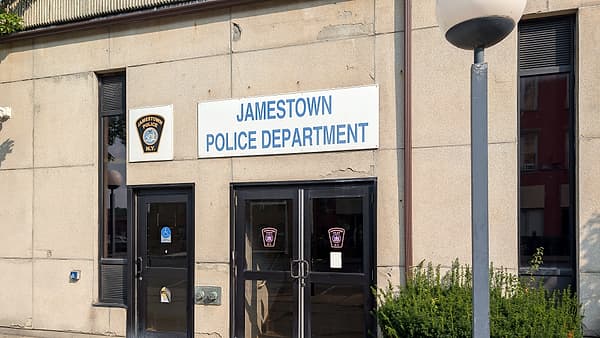
Police Reports and Incident Records
A police report records the officer's own observations, the accounts given by others, and the officer's conclusion. Only the first of those is direct evidence. The report is frequently inadmissible for the truth of what it contains, though it remains valuable for identifying witnesses, fixing times and establishing what was said at the scene.

Redactions and What They Conceal
A redaction removes protected content while leaving the rest of the document usable. It should be visible, it should cite the ground relied on, and the remainder should be produced. Silent removal, whole-document withholding where partial production was possible, and over-broad application of an exemption are all challengeable, usually through internal review.

Medical Records and Who May Release Them
Providers release records to the patient on request, to third parties on a compliant written authorization, and to anybody under valid compulsory process with the notice the rules require. An authorization has to identify the record, the recipient and the purpose, state an expiry, and carry the patient's signature. Most refusals are refusals of the paperwork rather than of the request.