Records Destroyed on Schedule
A record that has passed its retention period has not been mislaid. It has been destroyed deliberately, by a policy written years earlier, and the same policy that removed it will usually say precisely when it went and what was kept instead.
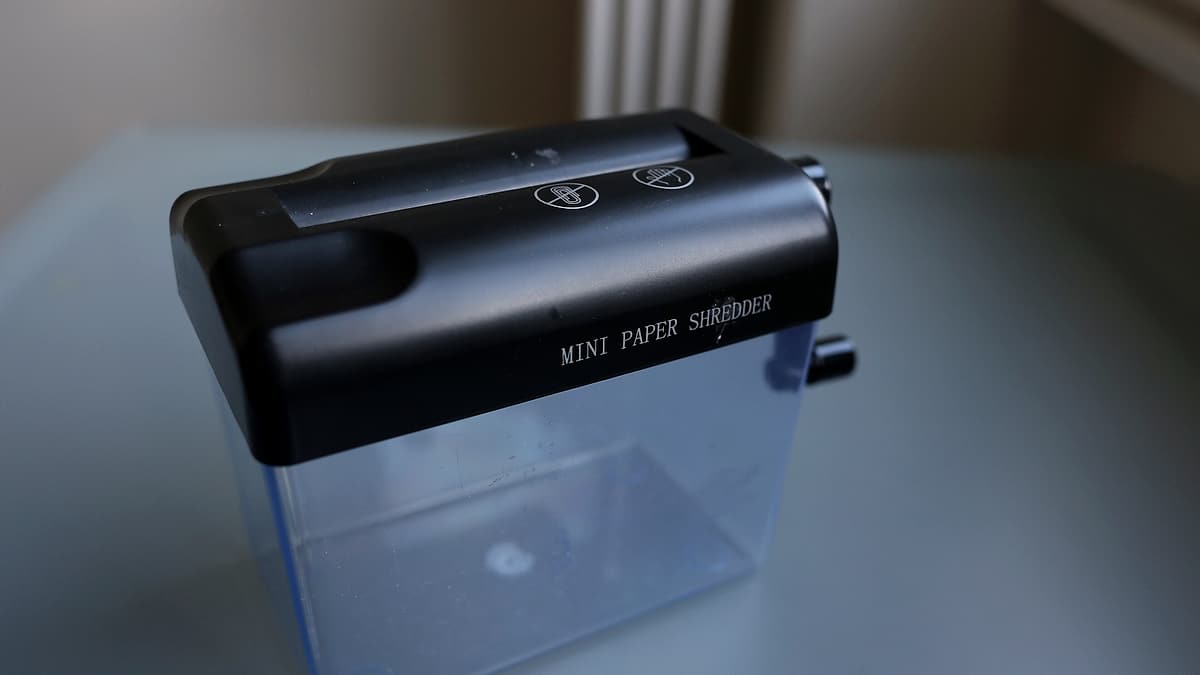
The rule in short
Retention schedules govern how long each class of record is kept and what happens at the end. They are published by public bodies, required of regulated institutions and adopted internally by most large organizations. Reading the schedule turns an unhelpful nil return into a checkable statement, and identifies which longer-retained record may still answer the question.
The answer that a record no longer exists is treated as an obstruction and is usually a description of ordinary practice. Organizations destroy material on a timetable, and the timetable is written down. Finding it converts a dead end into a map of what else might still be there.
How retention schedules work
Records are classed, then dated. A schedule assigns every class of record a retention period measured from a trigger event: creation, closure of a file, the end of a relationship, or the end of a financial year.
Different classes, different periods. One organization will hold core registers permanently, financial records for seven years and routine correspondence for two. A nil return for one class says nothing about another.
The end is usually destruction. Some classes are transferred to an archive instead, and a minority are marked for permanent retention. The schedule states which happens to each class.
Destruction is documented. Well-run organizations keep a destruction certificate or log recording what was destroyed and when, which is itself a record and can be requested.
Public bodies publish theirs. Government retention schedules are generally public documents, published as a matter of course. Regulated institutions can usually be asked for the relevant extract without any formality at all, and most supply it.
Reading a schedule usefully
Find the class, not the document. Schedules describe categories rather than individual papers, and the useful question is which category the missing document fell into.
Identify the trigger. A period of six years from closure of a file is very different from six years from creation, and which one applies decides whether the material should still exist.
Look for the longer-retained neighbor. Where detailed records have gone, a summary, register or index of them is frequently retained for much longer and answers a narrower version of the question.
Check for exceptions. Most schedules suspend destruction for material subject to litigation, audit or an open complaint, which occasionally means the record survives after all.
Note when the window closed. Establishing the date on which material would have been destroyed is useful in itself. It fixes the point after which nothing could have been obtained, and it identifies whether an earlier request would have succeeded.
| Record class | Typical period | What usually survives it |
|---|---|---|
| Routine correspondence | Two to three years | Anything filed on a case record |
| Financial and payroll | Six to seven years | Annual accounts and returns |
| Personnel files | Several years after departure | Dates of employment and role |
| Case or matter files | Years after closure | The index and the outcome record |
| Core registers | Permanent | Everything |
What usually survives
Registers and indexes. The list of what existed frequently outlives the things listed, which supports proving that a record once existed even where its contents are gone.
Summary and management reporting. Figures extracted from detailed records for reporting purposes are held elsewhere, on different schedules, and often answer the question at a coarser level.
Material sent to somebody else. A copy that left the organization is on the recipient's schedule rather than on this one, which is why the counterparty is always worth asking.
Anything drawn into a proceeding. Material once produced in litigation or an audit has usually been copied into a file with a much longer life.
Backups, sometimes. System backups occasionally retain material after the live record has been deleted. Most organizations cycle them within months and treat them as disaster recovery rather than as an archive, so the window is short and the process expensive.
Asking for the retention schedule costs nothing and is rarely refused. It converts a bare statement that nothing exists into a proposition anybody can check, and it points directly at whichever longer-retained record may still answer the question.
Stopping the clock
A preservation request works. A letter identifying specific material and asking that it be preserved pending a dispute is honoured by most organizations and costs nothing to send.
It has to be specific. A request to preserve everything is unworkable and will be treated as such. Naming a file, a period and a category makes it actionable.
Send it early. The value of a preservation request falls to nothing the day the material is destroyed, and destruction happens on a timetable nobody outside the organization can see.
It fixes the date of knowledge. The letter establishes when the holder knew the material mattered, which is what separates ordinary destruction from spoliation.
Confirm receipt. An acknowledgment is worth having, because a preservation request that cannot be shown to have arrived is a preservation request that did not happen.
When the record has genuinely gone
Establish it properly. Correspondence confirming the class, the period, the trigger and the destruction date turns an absence into an accounted-for fact rather than an unexplained gap.
Ask for the destruction record. Where one exists it is far stronger than an assertion, because it was created at the time by somebody with no interest in this dispute.
Look sideways. Recipients, regulators, auditors, insurers and successors in title all hold copies of things on their own schedules, and none of them destroyed on the same day.
Reconstruct from what remains. Registers, summaries and correspondence about the record frequently permit its contents to be established, as reconstruction from fragments describes.
Say so plainly. A gap explained by a published retention policy is a gap nobody can make anything of, and explaining it is far better than leaving it to be noticed.
The most useful mental adjustment is to stop treating destruction as loss. It is a deliberate act performed under a policy, and policies can be read, which makes the whole question tractable in a way that genuine loss never is.
Because periods differ so sharply within a single organization, a nil return for one class of material tells nobody anything about another. The detailed file may be gone while the register, the summary and the outcome record are all still there.
The single most valuable habit is the early preservation request. It is a paragraph, it costs nothing, and it is the only thing that stops a schedule from running while everybody is still deciding whether there is going to be a dispute.
Where material has genuinely been destroyed, establishing that properly is worth the effort. An absence explained by a published policy and a destruction record is neutral; an absence nobody has explained invites a much less comfortable inference.
Finally, the same schedules apply to the requester's own organization. A party that destroyed its own records on schedule is in a strong position; one that destroyed them after a dispute became foreseeable is in a very different one.
Points to carry away
- Destruction is policy-driven and documented, not accidental.
- Schedules are frequently published and can be requested where they are not.
- Different classes of record within one organization have different periods.
- Something summarizing the destroyed material often survives it.
- A preservation request stops the schedule for identified material.
Questions readers ask
Can an organization be required to keep records indefinitely?
Not in general. Retention schedules exist precisely because indefinite retention is expensive, and both regulators and privacy rules positively discourage keeping personal information longer than necessary. What can be required is preservation of identified material once a dispute is reasonably foreseeable, and that obligation attaches to specific material rather than to everything. Outside that, an organization destroying records under a published policy is doing what it is supposed to do.
Is a destruction certificate obtainable?
Where one exists, usually yes, and it is worth asking for. Many organizations record what was destroyed, under which schedule item, on what date and by whose authority, precisely so that they can demonstrate later that destruction was routine. That record was created at the time by somebody with no interest in any subsequent dispute, which makes it considerably stronger evidence than a letter written afterward asserting that the material is gone.
Do backups keep material after the live record is deleted?
Sometimes, and rarely for long. Most organizations cycle backups within weeks or months, overwriting older sets, and most treat backup media as disaster recovery rather than as an archive. Where a request or an order reaches backups the process is expensive and disruptive, which is why holders resist it and why it is generally reserved for material that genuinely cannot be obtained any other way. The practical answer is usually to look for a copy elsewhere instead.
Sources
- National Archives — Records Management, Scheduling Recordsarchives.gov
- National Archives — Freedom of Information Actarchives.gov
- Federal Rules of Civil Procedure — Rule 37, Failure to Make Disclosureslaw.cornell.edu
- Federal Rules of Civil Procedure — Rule 26, Duty to Discloselaw.cornell.edu
- Federal Rules of Evidence — Rule 803, Exceptions to the Rule Against Hearsaylaw.cornell.edu
- 5 U.S. Code § 552 — Freedom of Information Actlaw.cornell.edu
True Justice Record is a publication, not a law firm. This article states general rules and cites its sources; it is not advice about any particular case, and the law differs by state and changes over time.
More in Records Somebody Else Holds
Police Reports and Incident Records
A police report records the officer's own observations, the accounts given by others, and the officer's conclusion. Only the first of those is direct evidence. The report is frequently inadmissible for the truth of what it contains, though it remains valuable for identifying witnesses, fixing times and establishing what was said at the scene.

Redactions and What They Conceal
A redaction removes protected content while leaving the rest of the document usable. It should be visible, it should cite the ground relied on, and the remainder should be produced. Silent removal, whole-document withholding where partial production was possible, and over-broad application of an exemption are all challengeable, usually through internal review.

Medical Records and Who May Release Them
Providers release records to the patient on request, to third parties on a compliant written authorization, and to anybody under valid compulsory process with the notice the rules require. An authorization has to identify the record, the recipient and the purpose, state an expiry, and carry the patient's signature. Most refusals are refusals of the paperwork rather than of the request.